
Waterlily aphid
Rhopalosiphum nymphaeae

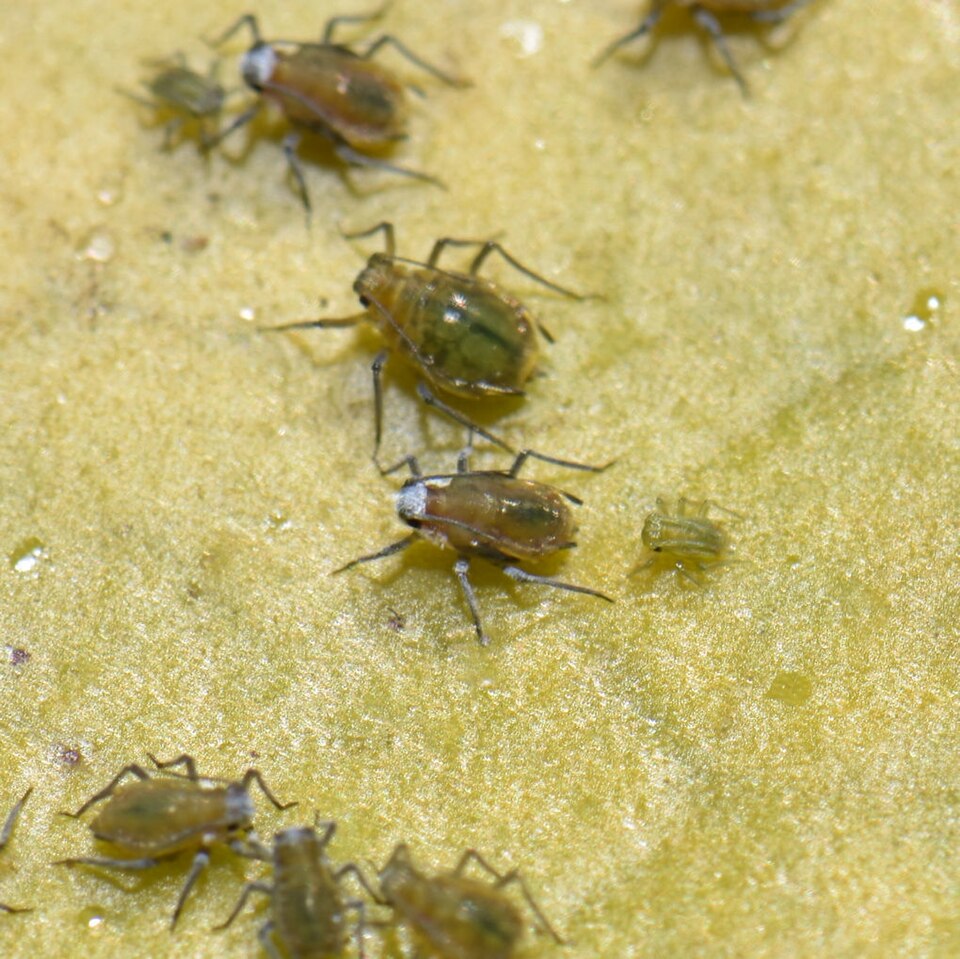
The waterlily aphid is a tiny soft bug that lives on water lilies in Europe. It looks like a typical aphid, small and round. It sucks juice from the plants, and when there are lots of them the lily leaves suffer.
Lives in
Europe, on water lilies in ponds
Can it hurt you?
Harmless
Harmless to people. It can only hurt water lilies.
What does it eat?
It sucks sweet sap from water lily leaves with its tiny beak.
How fast is it?
Waterlily aphid about 0.01 km/h (0.01 mph)
A garden snail about 0.05 km/h (0.03 mph)
A tortoise about 0.3 km/h (0.19 mph)
A person walking about 5 km/h (3.1 mph)
cool stuff
Fun facts
1
It has six to eight generations in one year, so there can be lots of them by the end of summer.
2
Its eggs spend the winter on bushes, not in the water.
3
When there are very many of them, water lily leaves curl up as they come out of the water and turn pale and dry.
you asked
Most asked questions about Waterlily aphid
?What does the waterlily aphid eat?
It sucks the juice out of water lily leaves.
?Is the waterlily aphid harmful?
Not to people. But lots of them can damage water lilies in a pond.
For bug experts
- Scientific name
- Rhopalosiphum nymphaeae
- Group
- True bugs and cicadas
- Family
- Aphididae
- Classification
- Insecta > Hemiptera > Aphididae
- Lives on
- Europe
Where the facts come from
- Rhopalosiphum nymphaeae (Wikipedia, CC BY-SA 4.0): what it looks like, where it lives, what it eats, sizes and fun facts, retold in simple words.
- Picture by Reiner Jakubowski. CC BY-SA 4.0, Wikimedia Commons. The sticker of this bug is drawn from this picture.
If we got something wrong, sorry, we are bug fans, not a science journal. Tell us at [email protected] and we will fix it.
Bug Wiki honey jar For grown-ups: Bug Wiki is free, with no ads and no tracking. A small tip helps keep it online.Leave a tip Pharaoh cicada
 Spotted lanternfly
 Brown marmorated stink bug
 Cochineal
 Boxelder bug
 Western conifer seed bug
 Stone spider
 Azure bluet
 White-dotted mosquito
 White-tailed skimmer
 Wandering percher
 White pill woodlouse