
High noon ant

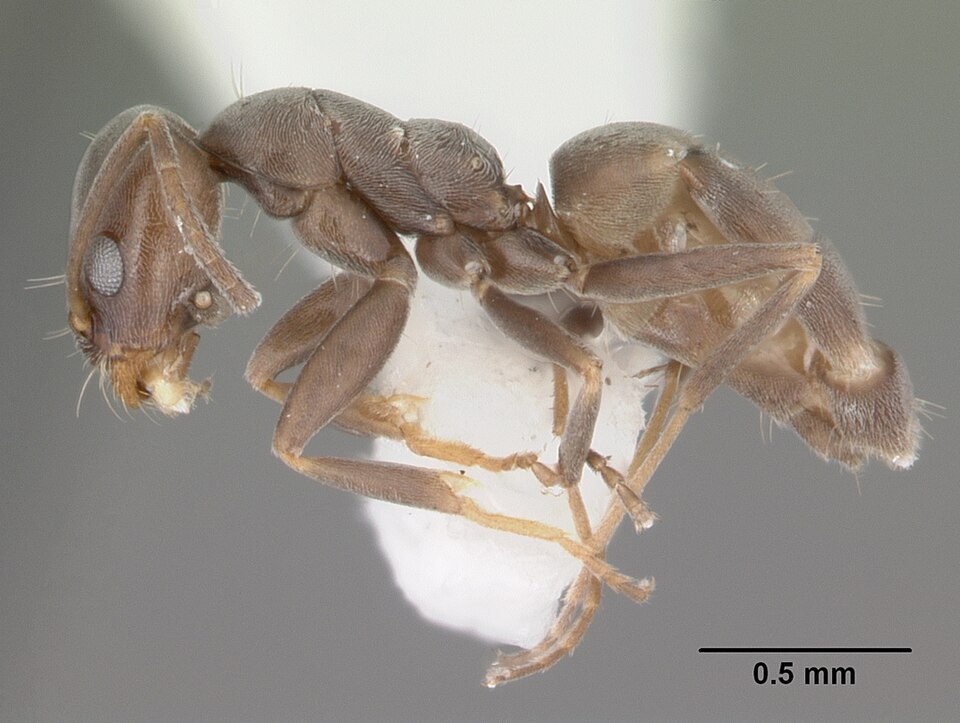
The high noon ant is a tiny ant that loves the heat. It is busiest when the sun is hot, which fits its name. It eats nectar and small creatures, and makes friends with some caterpillars and cactuses.
How fast is it?
Fun facts
A colony can have many queens, not just one.
It protects the caterpillars of the rare Miami blue butterfly, just by being there and scaring other hunters away.
A cactus gives it nectar, and in return the ants chase away animals that want to eat the cactus.
Its nests are connected by trails, and the ants mark their paths with a special smell.
It survived controlled forest fires better than many other ants.
Most asked questions about High noon ant
?Why is it called the high noon ant?
Because it is most active when it is hot, around the middle of the day.
?What does the high noon ant eat?
Flower nectar, small insects and dead animals.
For bug experts
- Scientific name
- Forelius pruinosus
- Named by
- Roger, 1863
- Group
- Ants
- Family
- Formicidae
- Classification
- Insecta > Hymenoptera > Formicidae
- Lives on
- North America, South America
Where the facts come from
- Forelius pruinosus (Wikipedia, CC BY-SA 4.0): what it looks like, where it lives, what it eats, sizes and fun facts, retold in simple words.
- Picture by April Nobile. CC BY 4.0, Wikimedia Commons. The sticker of this bug is drawn from this picture.
If we got something wrong, sorry, we are bug fans, not a science journal. Tell us at [email protected] and we will fix it.
Bug Wiki honey jar For grown-ups: Bug Wiki is free, with no ads and no tracking. A small tip helps keep it online.Leave a tip Black garden ant
 Bullet ant
 Pharaoh ant
 Argentine ant
 Red imported fire ant
 Yellow crazy ant
 Australian plague locust
 Giant leaf-footed bug
 Christmas beetle
 Common blue
 Red velvet mite
 Common buckeye