
Northern spreadwing

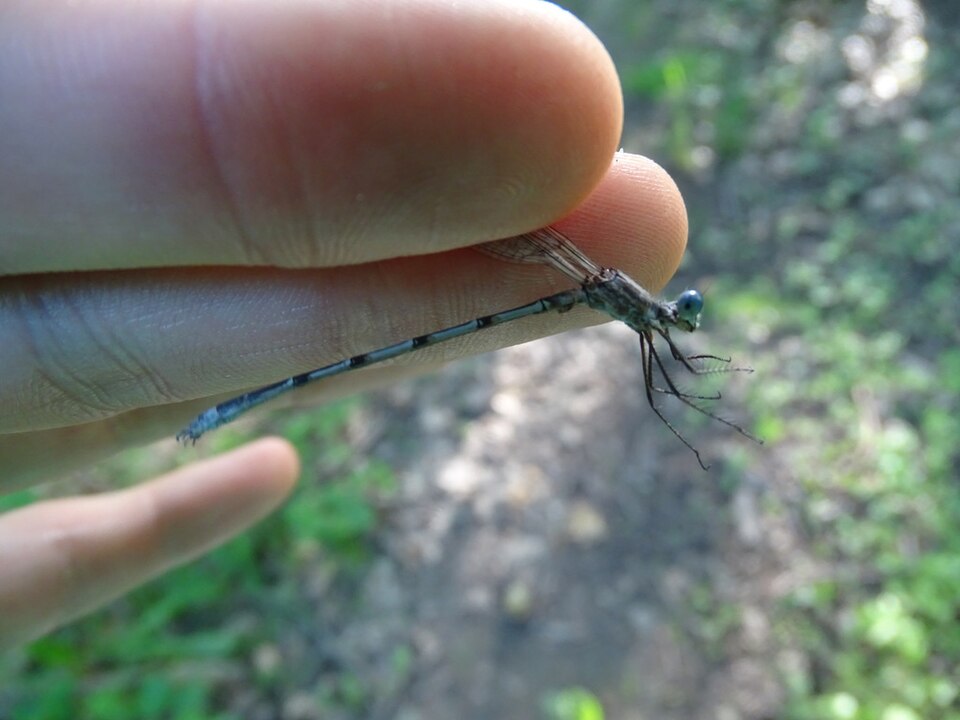
The northern spreadwing is a slim damselfly from North America. It belongs to the spreadwings, a group of damselflies that often rest with their wings held partly open. It flutters around plants near the water.
How fast is it?
Fun facts
Spreadwings often rest with their wings partly open, while most other damselflies fold them together along their back.
Experts checked on it in 2017 and found that there are plenty of them and their numbers are steady.
Its babies grow up under water before they climb out and get their wings.
Most asked questions about Northern spreadwing
?Is the northern spreadwing dangerous?
No. Damselflies have no sting and are harmless to people.
?Why is it called a spreadwing?
Because it often rests with its wings held partly open instead of folded together.
For bug experts
- Scientific name
- Lestes disjunctus
- Group
- Dragonflies and damselflies
- Family
- Lestidae
- Classification
- Insecta > Odonata > Lestidae
- Lives on
- North America
Where the facts come from
- Lestes disjunctus (Wikipedia, CC BY-SA 4.0): what it looks like, where it lives, what it eats, sizes and fun facts, retold in simple words.
- Picture by Reuven Martin. CC0, Wikimedia Commons. The sticker of this bug is drawn from this picture.
If we got something wrong, sorry, we are bug fans, not a science journal. Tell us at [email protected] and we will fix it.
Bug Wiki honey jar For grown-ups: Bug Wiki is free, with no ads and no tracking. A small tip helps keep it online.Leave a tip Emperor dragonfly
 Common whitetail
 Green darner
 Ebony jewelwing
 Globe skimmer
 Blue dasher
 Lesser water boatman
 Palamedes swallowtail
 Drake mackerel
 Brown waterscorpion
 Shore spider
 Fringed diving beetle