
African cone-head
Conocephalus conocephalus

The African cone-head is a slim bush-cricket with a pointy, cone-shaped head. It lives in Africa and in southern Europe. It is the very first cone-head that scientists named, so its whole group is named after it.
Lives in
Africa and southern Europe, including France, in grassy places
Can it hurt you?
Harmless
Harmless. It does not sting.
What does it eat?
Cone-heads like it eat grass seeds and soft plant parts, and sometimes small insects.
How fast is it?
African cone-head about 3 km/h (1.9 mph)
A person walking about 5 km/h (3.1 mph)
A kid running fast about 13 km/h (8.1 mph)
A grown-up on a bike about 25 km/h (16 mph)
cool stuff
Fun facts
1
It was named in 1767 by Carl Linnaeus, the famous Swedish scientist who gave names to thousands of animals and plants.
2
Its whole genus, the cone-heads, uses it as the main example.
3
The first specimens Linnaeus used have been lost, but they probably came from Africa.
you asked
Most asked questions about African cone-head
?Why is it called a cone-head?
Because the front of its head is pointed, like a cone.
?Where does the African cone-head live?
In Africa and in southern Europe, including France.
For bug experts
- Scientific name
- Conocephalus conocephalus
- Named by
- Linnaeus, 1767
- Group
- Grasshoppers and crickets
- Family
- Tettigoniidae
- Classification
- Insecta > Orthoptera > Tettigoniidae
- Lives on
- Africa, Europe
Where the facts come from
- Conocephalus conocephalus (Wikipedia, CC BY-SA 4.0): what it looks like, where it lives, what it eats, sizes and fun facts, retold in simple words.
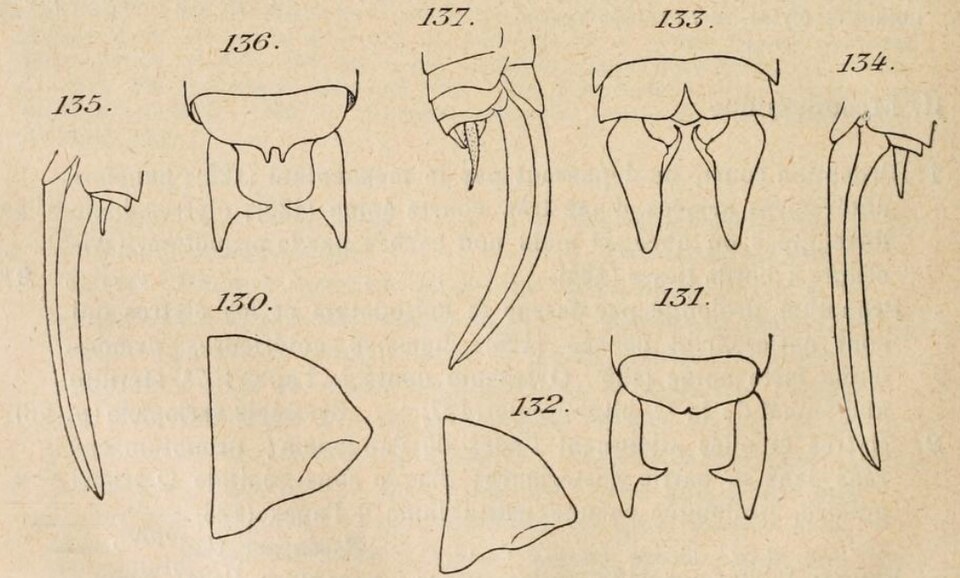
- Picture by Chopard. Public domain, Wikimedia Commons. The sticker of this bug is drawn from this picture.
If we got something wrong, sorry, we are bug fans, not a science journal. Tell us at [email protected] and we will fix it.
Bug Wiki honey jar For grown-ups: Bug Wiki is free, with no ads and no tracking. A small tip helps keep it online.Leave a tip Desert locust
 House cricket
 Parktown prawn
 Eastern lubber grasshopper
 Australian plague locust
 Mormon cricket
 Asian cockroach
 Jersey tiger
 Bogong moth
 European paper wasp
 Amber wood cockroach
 Northern paper wasp