
Knot grass moth

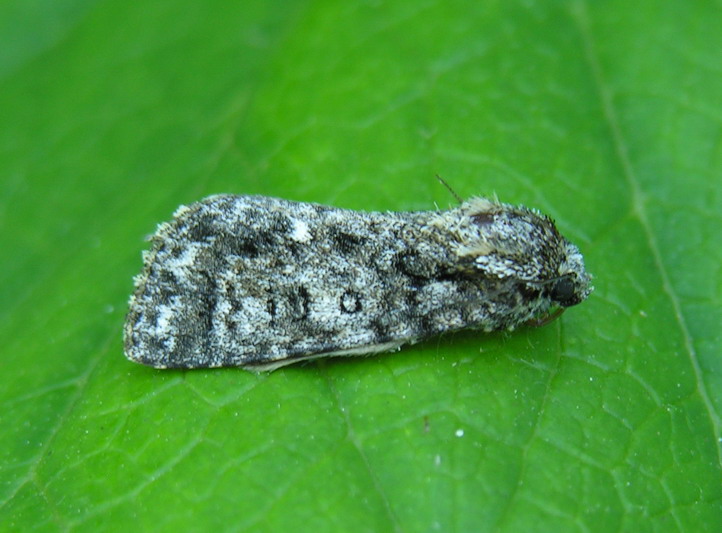
The knot grass moth is a grey night moth with dark and light blotches on its front wings. It has one little white spot on the back edge of each front wing, which helps you tell it apart from its cousins. It folds its wings over its back like a small tent.
How big is it?
How wide are its wings?
How big is Knot grass moth compared to YOU?
Just maths in your browser. Nothing is saved or sent anywhere.
How fast is it?
Fun facts
About 100 years ago, when factory smoke made Europe dirty, darker grey knot grass moths became much more common.
The caterpillar is marbled grey with a row of red spots on its back and white spots along its sides.
In the south of Europe it can have three families a year, but in the north only one.
It spends the winter as a pupa wrapped in a cocoon.
Moths from China and Japan are bigger and darker than the ones in Europe.
Most asked questions about Knot grass moth
?What does the knot grass caterpillar eat?
Low plants like dock, sorrel, bramble and thistles, and sometimes crops like maize and strawberries.
?Is the knot grass moth rare?
It is still found in most of Europe, but it is becoming rarer in the United Kingdom, where people work to protect it.
For bug experts
- Scientific name
- Acronicta rumicis
- Named by
- Linnaeus, 1758
- Group
- Moths
- Family
- Noctuidae
- Classification
- Insecta > Lepidoptera > Noctuidae
- Lives on
- Europe, Asia
Where the facts come from
- Acronicta rumicis (Wikipedia, CC BY-SA 4.0): what it looks like, where it lives, what it eats, sizes and fun facts, retold in simple words.
- Picture by unknown author. CC BY-SA 3.0, Wikimedia Commons. The sticker of this bug is drawn from this picture.
If we got something wrong, sorry, we are bug fans, not a science journal. Tell us at [email protected] and we will fix it.
Bug Wiki honey jar For grown-ups: Bug Wiki is free, with no ads and no tracking. A small tip helps keep it online.Leave a tip Atlas moth
 Luna moth
 Hummingbird hawk-moth
 Domestic silk moth
 Isabella tiger moth
 Polyphemus moth
 Toothed tiger ichneumon
 Black-and-red bug
 Map butterfly
 Common hover fly parasitoid wasp
 Wasp nest beetle
 Common crane fly