
Northern dusk-singing cicada
Megatibicen grossus

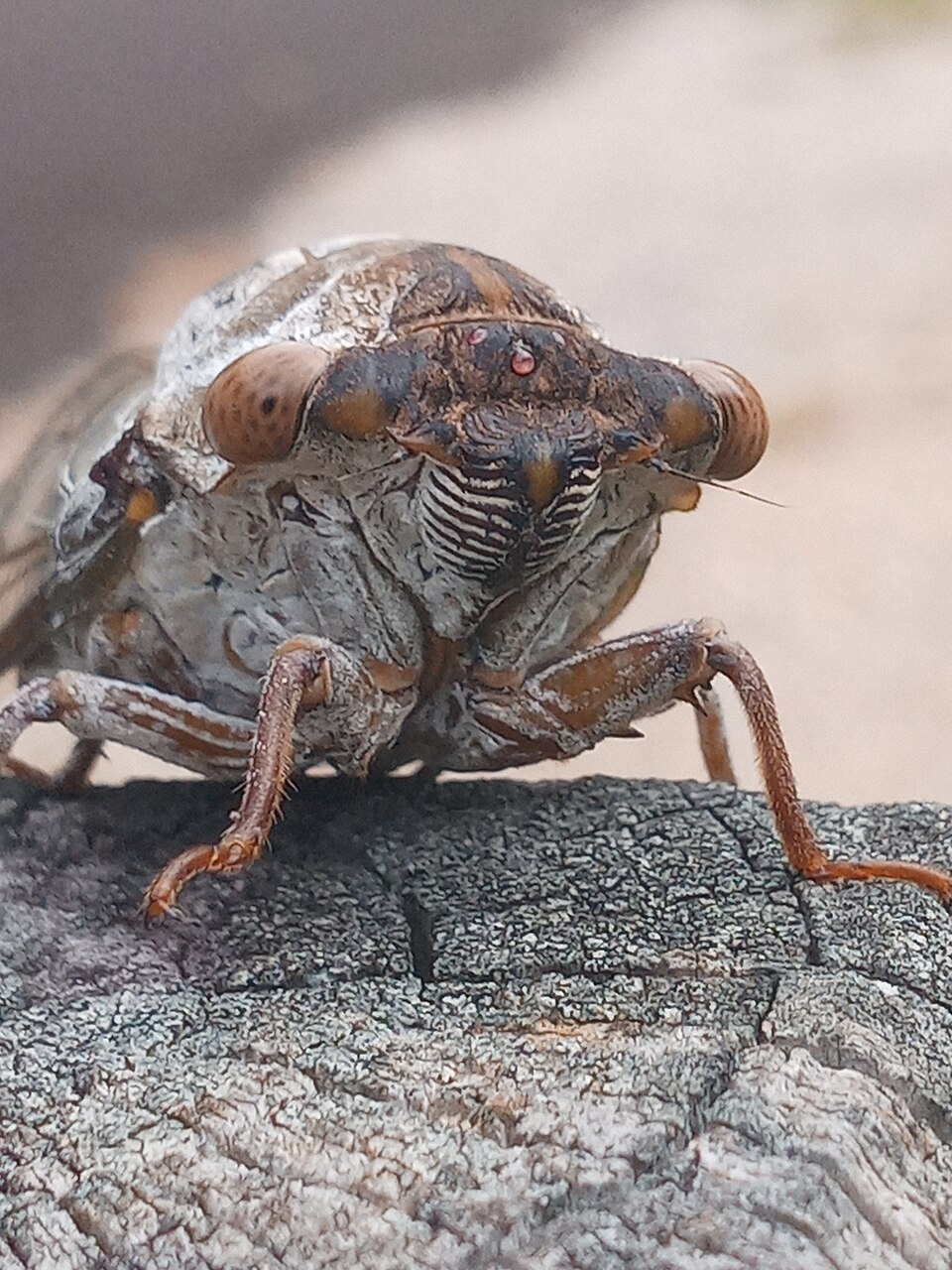
The northern dusk-singing cicada is a big, chunky cicada that lives among oak trees. It is the largest cicada in North America north of Mexico. As its name says, it sings when evening comes.
Lives in
Eastern United States and parts of southeastern Canada
Can it hurt you?
Harmless
Harmless. Cicadas do not sting, and this one just wants to sing in the trees.
What does it eat?
Like other cicadas, it drinks sap from plants through a mouth shaped like a straw. It is linked to oak trees.
How fast is it?
A person walking about 5 km/h (3.1 mph)
Northern dusk-singing cicada about 12 km/h (7.5 mph)
A kid running fast about 13 km/h (8.1 mph)
A grown-up on a bike about 25 km/h (16 mph)
cool stuff
Fun facts
1
It is the biggest cicada in North America north of Mexico.
2
It is closely tied to oak trees, which is why some people call it the giant oak cicada.
3
Scientists used to call it by a different name, Megatibicen auletes.
you asked
Most asked questions about Northern dusk-singing cicada
?Is the northern dusk-singing cicada dangerous?
No. It does not sting and is harmless to people.
?Where does the northern dusk-singing cicada live?
In the eastern United States and parts of southeastern Canada, around oak trees.
For bug experts
- Scientific name
- Megatibicen grossus
- Group
- True bugs and cicadas
- Family
- Cicadidae
- Classification
- Insecta > Hemiptera > Cicadidae
- Lives on
- North America
- Also known as
- Giant oak cicada, Southern oak cicada
Where the facts come from
- Megatibicen grossus (Wikipedia, CC BY-SA 4.0): what it looks like, where it lives, what it eats, sizes and fun facts, retold in simple words.
- Picture by jupiterswasphouse Depicted place: Mississippi, USA ( 34°46′39″N 88°32′40″W / 34.777474°N 88.544553°W / 34.777474; -88.544553 ). CC BY-SA 4.0, Wikimedia Commons. The sticker of this bug is drawn from this picture.
If we got something wrong, sorry, we are bug fans, not a science journal. Tell us at [email protected] and we will fix it.
Bug Wiki honey jar For grown-ups: Bug Wiki is free, with no ads and no tracking. A small tip helps keep it online.Leave a tip Pharaoh cicada
 Spotted lanternfly
 Brown marmorated stink bug
 Cochineal
 Boxelder bug
 Western conifer seed bug
 Asian jumping worm
 Orange-tipped oakworm moth
 Banana slug
 Common true katydid
 Winter moth
 Acorn weevil