
March tubic

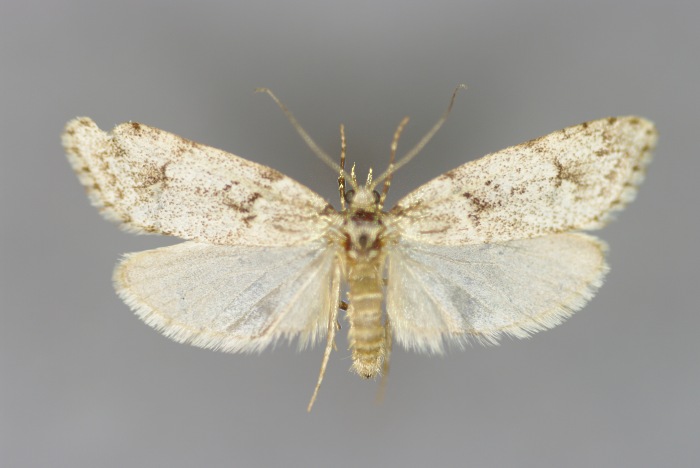
The March tubic is a pale grey speckled moth that flies in early spring, from March to May. The male can fly well, but the female is smaller and has short wings. During the day the males rest on tree trunks, where they blend in with the bark.
How big is it?
How wide are its wings?
How big is March tubic compared to YOU?
Just maths in your browser. Nothing is saved or sent anywhere.
How fast is it?
Fun facts
The mother lays her eggs in batches of a hundred or more on twigs.
The caterpillar hides between two leaves that it spins together flat.
The caterpillars grow very slowly, from late May to October.
In some old factory areas of England, many of these moths are very dark.
Most asked questions about March tubic
?Why is it called the March tubic?
Because the moths come out in early spring, starting in March.
?What does the March tubic caterpillar eat?
Leaves of many trees and bushes, like oak, beech, birch, hazel and willow.
For bug experts
- Scientific name
- Diurnea fagella
- Named by
- Denis & Schiffermüller, 1775
- Group
- Moths
- Family
- Chimabachidae
- Classification
- Insecta > Lepidoptera > Chimabachidae
- Lives on
- Europe
- Also known as
- March dagger moth
Where the facts come from
- Diurnea fagella (Wikipedia, CC BY-SA 4.0): what it looks like, where it lives, what it eats, sizes and fun facts, retold in simple words.
- Picture by Michael Kurz. CC BY-SA 3.0 at, Wikimedia Commons. The sticker of this bug is drawn from this picture.
If we got something wrong, sorry, we are bug fans, not a science journal. Tell us at [email protected] and we will fix it.
Bug Wiki honey jar For grown-ups: Bug Wiki is free, with no ads and no tracking. A small tip helps keep it online.Leave a tip Atlas moth
 Luna moth
 Hummingbird hawk-moth
 Domestic silk moth
 Isabella tiger moth
 Polyphemus moth
 Musk beetle
 Common sexton beetle
 Kaiser-i-Hind
 Elephant mosquito
 Kerry slug
 Pine ladybird