
American sunflower moth
Homoeosoma electella

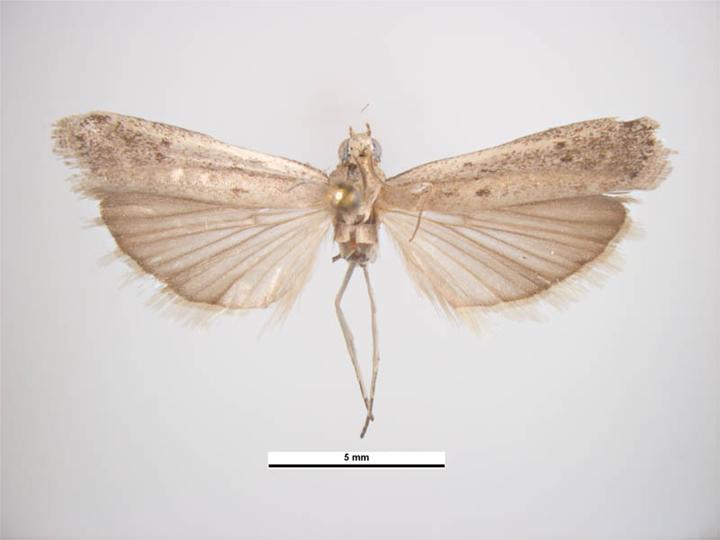
The American sunflower moth is a small moth from North America. Its caterpillars love the flowers and seeds of sunflowers and their relatives. Farmers who grow sunflowers keep a close eye on it.
Lives in
North America, and also South America
Wingspan
1.8 to 2 cm (0.71 to 0.79 in)
Can it hurt you?
Harmless
Harmless. It is a small moth that does not bite or sting.
What does it eat?
Its caterpillars eat the flowers and young seeds of sunflowers, echinacea and other aster plants. They have also been found on canola, cotton and oranges.
How big is it?
How wide are its wings?
🍚wings as wide as 3 grains of rice in a row⚽could fly across a whole football pitch in 38 seconds
How big is American sunflower moth compared to YOU?
Just maths in your browser. Nothing is saved or sent anywhere.
How fast is it?
A person walking about 5 km/h (3.1 mph)
American sunflower moth about 9.9 km/h (6.2 mph)
A kid running fast about 13 km/h (8.1 mph)
A grown-up on a bike about 25 km/h (16 mph)
cool stuff
Fun facts
1
Its caterpillars are pests on sunflower and canola farms.
2
Echinacea, the pink garden flower, is one of the plants its caterpillars eat.
3
Its wings are only about 2 centimetres across.
you asked
Most asked questions about American sunflower moth
?What does the American sunflower moth eat?
Its caterpillars eat the flowers and seeds of sunflowers and related plants.
?Where does the American sunflower moth live?
It comes from North America and is also found in South America.
For bug experts
- Scientific name
- Homoeosoma electella
- Group
- Moths
- Family
- Pyralidae
- Classification
- Insecta > Lepidoptera > Pyralidae
- Lives on
- North America, South America
Where the facts come from
- Homoeosoma electellum (Wikipedia, CC BY-SA 4.0): what it looks like, where it lives, what it eats, sizes and fun facts, retold in simple words.
- Picture by Ken Walker, Museum Victoria. CC BY 3.0 au, Wikimedia Commons. The sticker of this bug is drawn from this picture.
If we got something wrong, sorry, we are bug fans, not a science journal. Tell us at [email protected] and we will fix it.
Bug Wiki honey jar For grown-ups: Bug Wiki is free, with no ads and no tracking. A small tip helps keep it online.Leave a tip Atlas moth
 Luna moth
 Hummingbird hawk-moth
 Domestic silk moth
 Isabella tiger moth
 Polyphemus moth
 Money spider
 Keeled treehopper
 Dragon swallowtail
 Hedgehog tick
 Edith's checkerspot
 Common tachinid