
Reticulate taildropper
Prophysaon andersonii

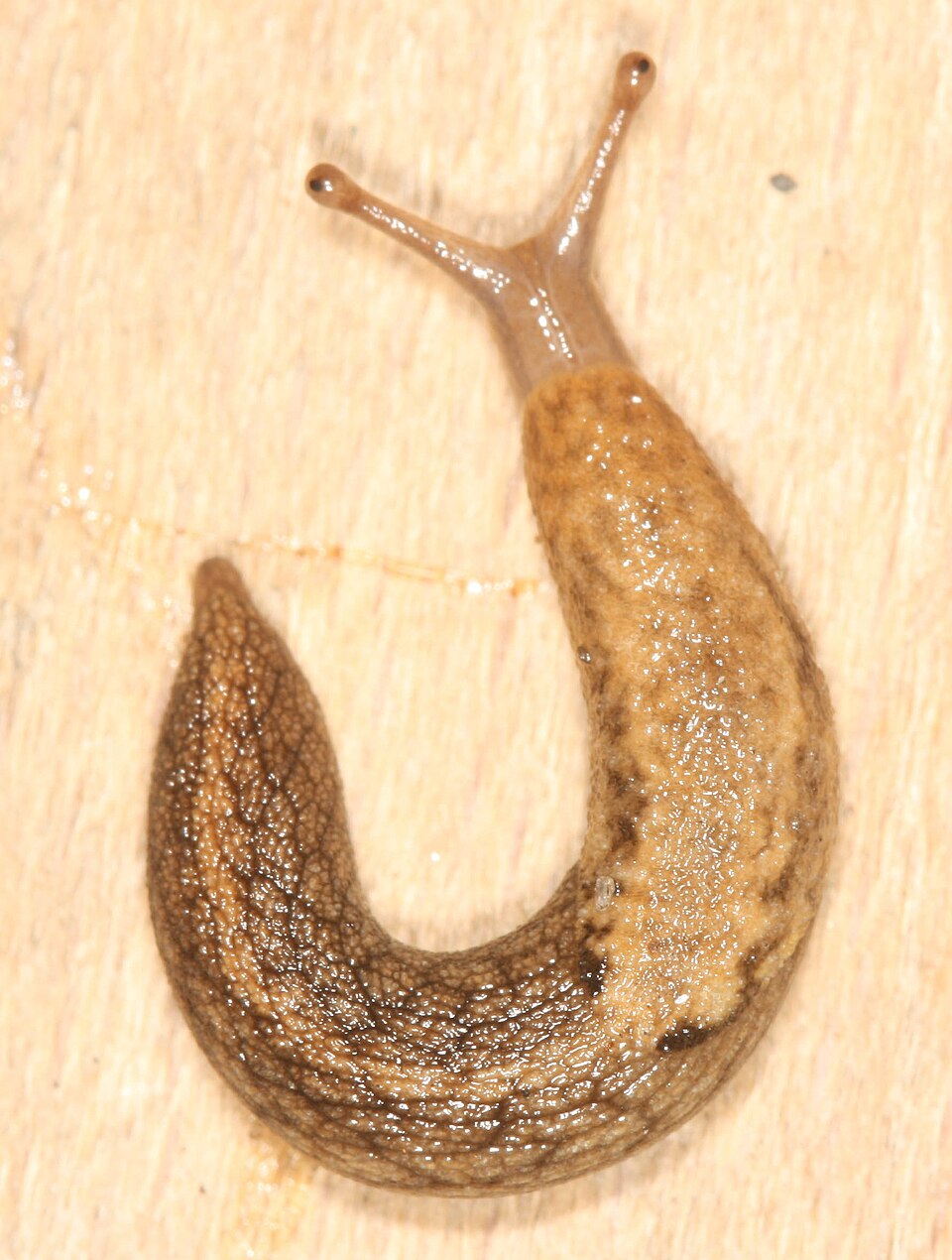
The reticulate taildropper is a slug from the west coast of North America. Its back is covered in a pattern like a net of little diamonds. Its most amazing trick is that it can drop off a piece of its own tail.
Fun fact: this one is not an insect at all, it has no legs! But kids find it on every bug hunt, so it lives in Bug Wiki too.
Lives in
The west coast of North America, from California to Idaho and Montana
Length
5 to 6 cm (2 to 2.4 in)
Can it hurt you?
Harmless
Harmless. Wash your hands after touching any slug.
What does it eat?
Like other land slugs, it nibbles plants and other soft food on the ground.
How big is it?
How long is it?
🧱as long as 2 toy building bricks in a row🍽️could run across a dinner table in 90 seconds
How big is Reticulate taildropper compared to YOU?
Just maths in your browser. Nothing is saved or sent anywhere.
How fast is it?
Reticulate taildropper about 0.04 km/h (0.02 mph)
A garden snail about 0.05 km/h (0.03 mph)
A tortoise about 0.3 km/h (0.19 mph)
A person walking about 5 km/h (3.1 mph)
cool stuff
Fun facts
1
Its slime is yellow or orange.
2
Slugs near the coast are often grey, while those further inland are browner.
3
It has two dark bands on the shield behind its head.
4
It can be greyish, reddish brown or yellowish.
you asked
Most asked questions about Reticulate taildropper
?Why is it called a taildropper?
Because it can drop off a part of its own tail.
?How big is the reticulate taildropper?
About 50 millimetres long when it is moving, and sometimes more than 60.
For bug experts
- Scientific name
- Prophysaon andersonii
- Group
- Snails, slugs and worms
- Family
- Ariolimacidae
- Classification
- Gastropoda > Stylommatophora > Ariolimacidae
- Lives on
- North America
Where the facts come from
- Prophysaon andersonii (Wikipedia, CC BY-SA 4.0): what it looks like, where it lives, what it eats, sizes and fun facts, retold in simple words.
- Picture by Scott Loarie. CC0, Wikimedia Commons. The sticker of this bug is drawn from this picture.
If we got something wrong, sorry, we are bug fans, not a science journal. Tell us at [email protected] and we will fix it.
Bug Wiki honey jar For grown-ups: Bug Wiki is free, with no ads and no tracking. A small tip helps keep it online.Leave a tip Garden snail
 Giant African land snail
 Leopard slug
 Bladder snail
 Medicinal leech
 Common earthworm
 Pale awlet
 Cassin's 13-year cicada
 Hungarian glider
 Filbertworm moth
 Lesser maple spanworm moth
 Small grey