
Bee moth

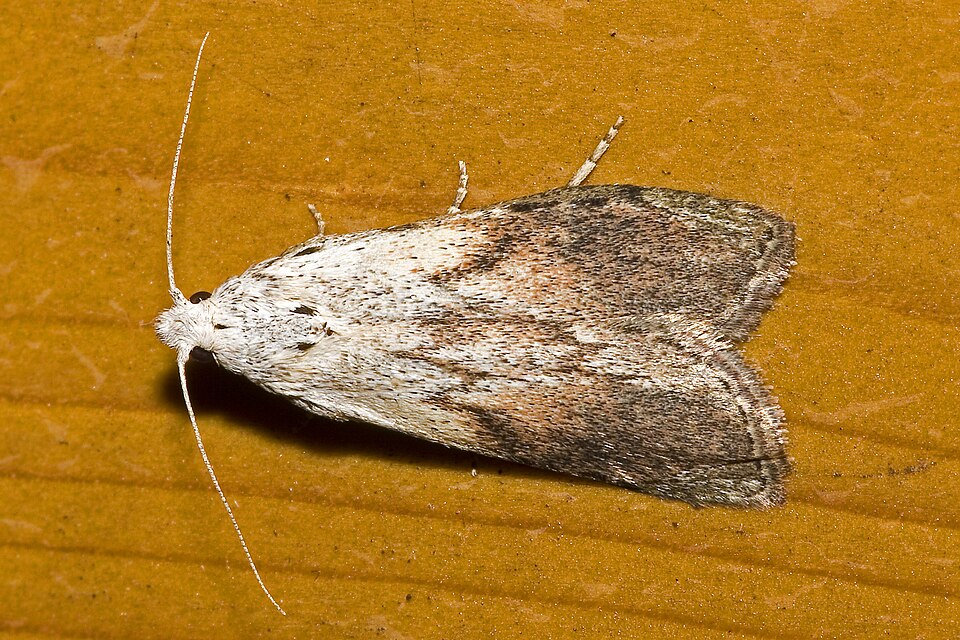
The bee moth is a small reddish brown, tan or greenish moth. It sneaks into the nests of bumblebees and wasps to lay its eggs. Its caterpillars grow up right inside the nest, eating whatever they can find.
How big is it?
How wide are its wings?
How big is Bee moth compared to YOU?
Just maths in your browser. Nothing is saved or sent anywhere.
How fast is it?
Fun facts
A female can lay up to 100 eggs in one bumblebee nest.
The caterpillars spin thick silk around themselves like armour, so the bees and wasps cannot hurt them.
If something scares a grown-up bee moth, it drops to the ground on its back and plays dead.
The male sings to the female with sounds too high for people to hear.
Its yellow caterpillars grow to about 2 to 3 centimetres long.
Most asked questions about Bee moth
?Why is it called the bee moth?
Because it lays its eggs in the nests of bumblebees and wasps.
?Is the bee moth bad for bees?
Yes. Its caterpillars tunnel through bumblebee nests and eat their food and babies.
For bug experts
- Scientific name
- Aphomia sociella
- Group
- Moths
- Family
- Pyralidae
- Classification
- Insecta > Lepidoptera > Pyralidae
- Lives on
- Europe, Asia, North America
- Also known as
- Bumble bee wax moth
Where the facts come from
- Aphomia sociella (Wikipedia, CC BY-SA 4.0): what it looks like, where it lives, what it eats, sizes and fun facts, retold in simple words.
- Picture by Olei. CC BY-SA 3.0, Wikimedia Commons. The sticker of this bug is drawn from this picture.
If we got something wrong, sorry, we are bug fans, not a science journal. Tell us at [email protected] and we will fix it.
Bug Wiki honey jar For grown-ups: Bug Wiki is free, with no ads and no tracking. A small tip helps keep it online.Leave a tip Atlas moth
 Luna moth
 Hummingbird hawk-moth
 Domestic silk moth
 Isabella tiger moth
 Polyphemus moth
 Tawny coster
 Elm leaf beetle
 Passionvine hopper
 Winter ant
 Green-veined white
 Southern carpenter bee