
European beak
Libythea celtis

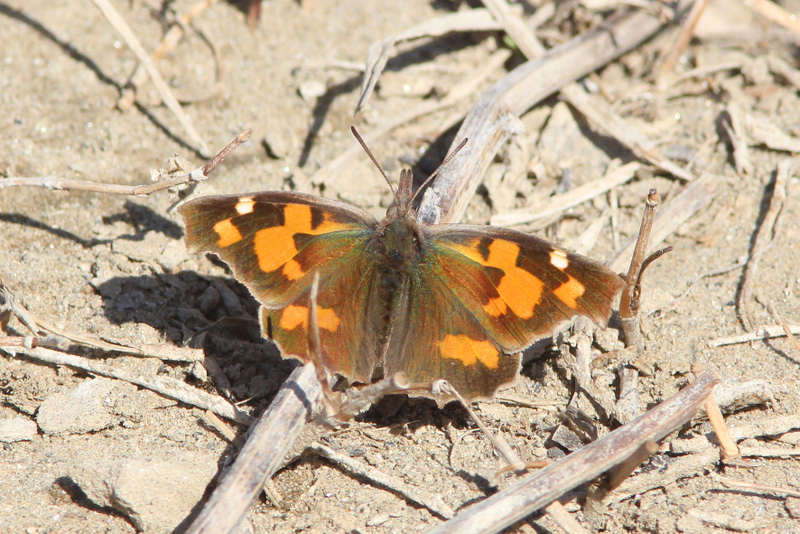
The European beak is a brown butterfly with orange patches and a small white spot near the tip of each front wing. Its edges look a bit chopped off. It is named for the long parts at the front of its head that stick out like a beak.
Lives in
Southern Europe, Asia Minor, Central Asia and the mountains of northern Pakistan
Can it hurt you?
Harmless
Harmless. It cannot bite or sting.
What does it eat?
The caterpillar eats the leaves of the nettle tree.
How fast is it?
A person walking about 5 km/h (3.1 mph)
A kid running fast about 13 km/h (8.1 mph)
European beak about 15 km/h (9.3 mph)
A grown-up on a bike about 25 km/h (16 mph)
cool stuff
Fun facts
1
Underneath, its back wings are pale purplish brown with tiny dark dots, which makes it hard to see.
2
It is also called the nettle-tree butterfly, after the tree its caterpillar eats.
3
It belongs to a small group of butterflies called the snouts or beaks.
you asked
Most asked questions about European beak
?Why is it called the European beak?
Because the parts at the front of its head stick out like a long beak.
?What does the European beak caterpillar eat?
The leaves of the nettle tree.
For bug experts
- Scientific name
- Libythea celtis
- Group
- Butterflies
- Family
- Nymphalidae
- Classification
- Insecta > Lepidoptera > Nymphalidae
- Lives on
- Europe, Asia
- Also known as
- Nettle-tree butterfly
Where the facts come from
- Libythea celtis (Wikipedia, CC BY-SA 4.0): what it looks like, where it lives, what it eats, sizes and fun facts, retold in simple words.
- Picture by This image is created by user Roelof de Beer at Observation.org , a global biodiversity recording project.. CC BY 3.0, Wikimedia Commons. The sticker of this bug is drawn from this picture.
If we got something wrong, sorry, we are bug fans, not a science journal. Tell us at [email protected] and we will fix it.
Bug Wiki honey jar For grown-ups: Bug Wiki is free, with no ads and no tracking. A small tip helps keep it online.Leave a tip Monarch butterfly
 Peacock butterfly
 Blue morpho
 Old World swallowtail
 Small white
 Eastern tiger swallowtail
 Sigmoid prominent
 Spotted thintail
 Compact carpenter ant
 Small Quaker
 Large black kekerengu
 Harris's three-spot