
Spurred ridgeback
Haplophthalmus danicus

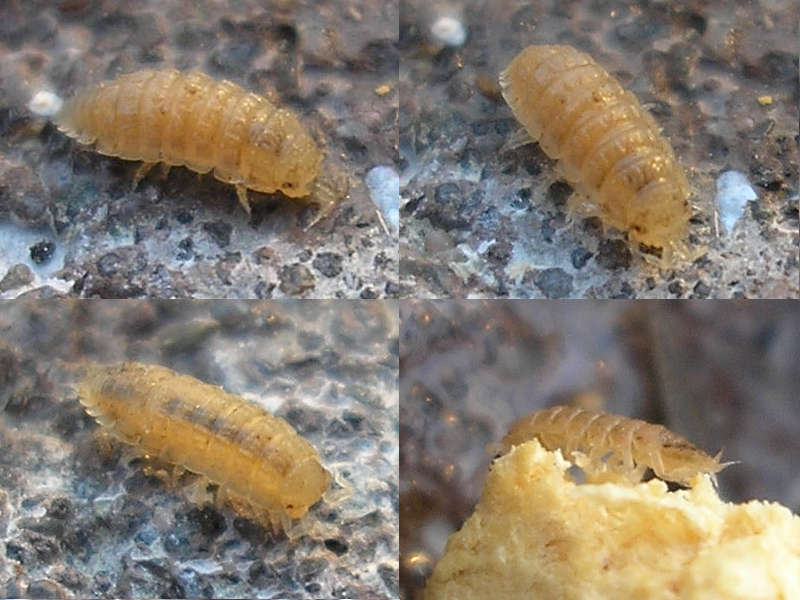
The spurred ridgeback is a tiny woodlouse. Woodlice are not insects at all but cousins of crabs and shrimps that live on land. It comes from Europe and Asia and likes damp, hidden places.
Fun fact: woodlice are not insects. They are crustaceans, cousins of crabs and shrimps, that live on land.
Lives in
Europe and Asia, and brought to North America, in damp soil and under logs and stones
Can it hurt you?
Harmless
Harmless. It cannot bite or sting.
What does it eat?
Like other woodlice, it eats dead leaves and rotting plant bits, which helps to clean up the ground.
How fast is it?
A garden snail about 0.05 km/h (0.03 mph)
Spurred ridgeback about 0.15 km/h (0.09 mph)
A tortoise about 0.3 km/h (0.19 mph)
A person walking about 5 km/h (3.1 mph)
cool stuff
Fun facts
1
Like all woodlice, it has 14 legs.
2
It was probably carried to North America by the first European settlers, and now it lives there too.
3
It has seven slightly different kinds.
you asked
Most asked questions about Spurred ridgeback
?Is the spurred ridgeback an insect?
No. It is a woodlouse, a land crustacean related to crabs and shrimps. It has 14 legs, not 6.
?Where does the spurred ridgeback live?
In Europe and Asia, and in North America where people brought it long ago.
For bug experts
- Scientific name
- Haplophthalmus danicus
- Named by
- Budde-Lund, 1880
- Group
- Woodlice
- Family
- Trichoniscidae
- Classification
- Malacostraca > Isopoda > Trichoniscidae
- Lives on
- Europe, Asia, North America
- Also known as
- Terrestrial cave isopod, Spurred ridgeback isopod
Where the facts come from
- Haplophthalmus danicus (Wikipedia, CC BY-SA 4.0): what it looks like, where it lives, what it eats, sizes and fun facts, retold in simple words.
- Picture by This image is created by user Arp at Waarneming.nl , a source of nature observations in the Netherlands.. CC0, Wikimedia Commons. The sticker of this bug is drawn from this picture.
If we got something wrong, sorry, we are bug fans, not a science journal. Tell us at [email protected] and we will fix it.
Bug Wiki honey jar For grown-ups: Bug Wiki is free, with no ads and no tracking. A small tip helps keep it online.Leave a tip Common pill bug
 Tongue-eating louse
 Giant isopod
 Sea slater
 Common rough woodlouse
 Wharf roach
 Bordered apamea moth
 Striped ground cricket
 Dancing amber
 Oberthür's grizzled skipper
 Pallid twig ant
 Little snipefly