
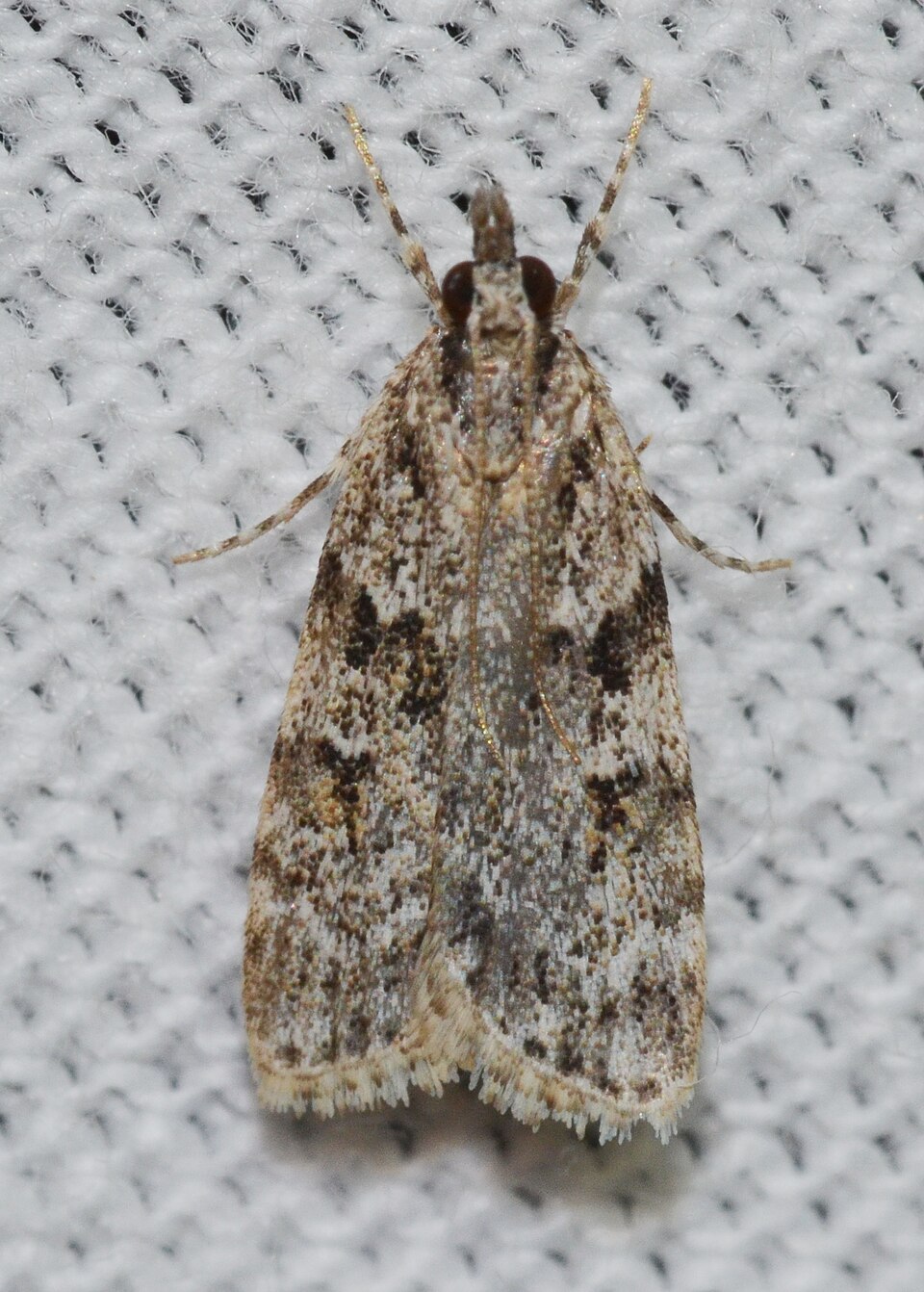
Double-striped scoparia moth
Scoparia biplagialis

The double-striped scoparia moth is a small moth from North America. Each of its front wings is only 6 to 8 millimetres long. It lives in a huge area, from Alaska all the way down to Florida.
Lives in
North America, from Alaska and Canada to California and Florida
Can it hurt you?
Harmless
Harmless. It is a small moth that cannot bite or sting.
What does it eat?
Like most moth caterpillars, its caterpillars eat plants.
How fast is it?
A person walking about 5 km/h (3.1 mph)
A kid running fast about 13 km/h (8.1 mph)
Double-striped scoparia moth about 14 km/h (8.7 mph)
A grown-up on a bike about 25 km/h (16 mph)
cool stuff
Fun facts
1
The grown-up moths fly from June to August.
2
Scientists know five different subspecies of it.
3
It was first described by the scientist Francis Walker in 1866.
you asked
Most asked questions about Double-striped scoparia moth
?Where does the double-striped scoparia moth live?
In North America, in many parts of Canada and the United States, from Alaska to Florida.
?How big is the double-striped scoparia moth?
It is small. Each front wing is only 6 to 8 millimetres long.
For bug experts
- Scientific name
- Scoparia biplagialis
- Named by
- Walker, 1866
- Group
- Moths
- Family
- Crambidae
- Classification
- Insecta > Lepidoptera > Crambidae
- Lives on
- North America
Where the facts come from
- Scoparia biplagialis (Wikipedia, CC BY-SA 4.0): what it looks like, where it lives, what it eats, sizes and fun facts, retold in simple words.
- Picture by Andy Reago & Chrissy McClarren. CC BY 2.0, Wikimedia Commons. The sticker of this bug is drawn from this picture.
If we got something wrong, sorry, we are bug fans, not a science journal. Tell us at [email protected] and we will fix it.
Bug Wiki honey jar For grown-ups: Bug Wiki is free, with no ads and no tracking. A small tip helps keep it online.Leave a tip Atlas moth
 Luna moth
 Hummingbird hawk-moth
 Domestic silk moth
 Isabella tiger moth
 Polyphemus moth
 Diaprepes root weevil
 Six-spotted zigzag ladybird
 Franklin's bumblebee
 West Coast lady
 Magnetic termite
 Bordered patch
.jpg)