

Arctic woolly bear moth
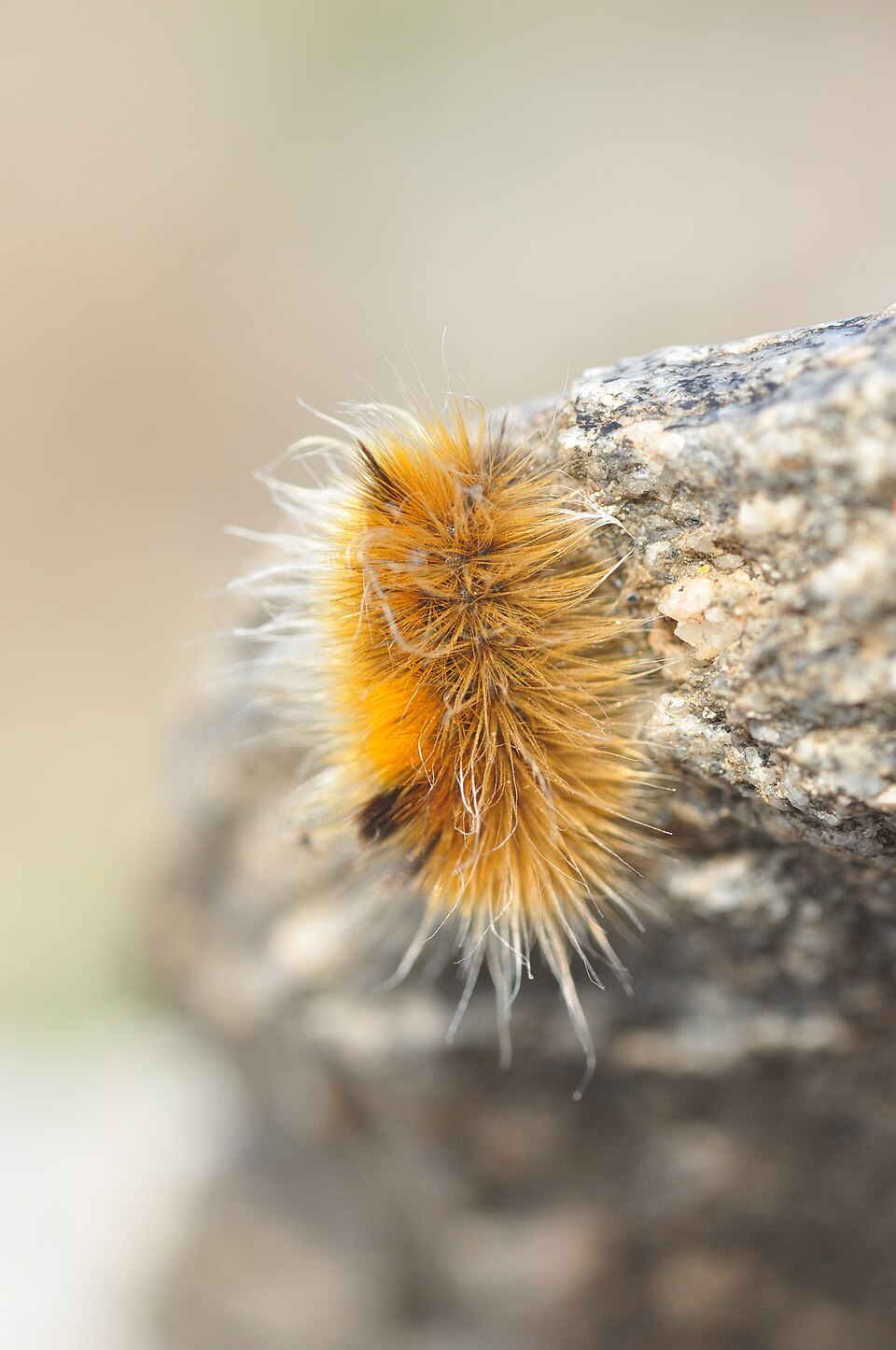
The Arctic woolly bear moth lives in one of the coldest places on Earth, in the far north near the North Pole. Its caterpillar is covered in thick, soft-looking tan hair, like a tiny teddy bear. It can stay a caterpillar for up to 7 years before it turns into a moth.
How fast is it?
Fun facts
During its long winter rest it can survive temperatures as low as minus 70 degrees.
It sleeps through most of the year and only grows a little each spring and summer.
It likes to sunbathe, which warms it up and helps it digest its food.
The females usually do not fly. Only the males flutter around.
Its cocoon has two layers with a pocket of air between them, like a double window.
Most asked questions about Arctic woolly bear moth
?How long does the Arctic woolly bear caterpillar live?
It can stay a caterpillar for up to 7 years before turning into a moth.
?How does it survive the cold?
It rests through the long winter and can survive about minus 70 degrees.
?Where does the Arctic woolly bear moth live?
In the High Arctic of Canada and Greenland, and on Wrangel Island in Russia.
For bug experts
- Scientific name
- Gynaephora groenlandica
- Named by
- Homeyer, 1874
- Group
- Moths
- Family
- Erebidae
- Classification
- Insecta > Lepidoptera > Erebidae
- Lives on
- North America, Asia
Where the facts come from
- Gynaephora groenlandica (Wikipedia, CC BY-SA 4.0): what it looks like, where it lives, what it eats, sizes and fun facts, retold in simple words.
- Picture by Oskar Liset Pryds Hansen. CC BY 4.0, Wikimedia Commons. The round sticker of this bug is cut from the same picture.
If we got something wrong, sorry, we are bug fans, not a science journal. Tell us at [email protected] and we will fix it.
 Atlas moth
 Luna moth
 Hummingbird hawk-moth
 Domestic silk moth
 Isabella tiger moth
 Polyphemus moth
 Eumillipes
 Northern scorpion
 Master blister beetle
 Costa Rican zebra tarantula
 Ghost mantis
 Red-headed mouse spider