

European nightcrawler
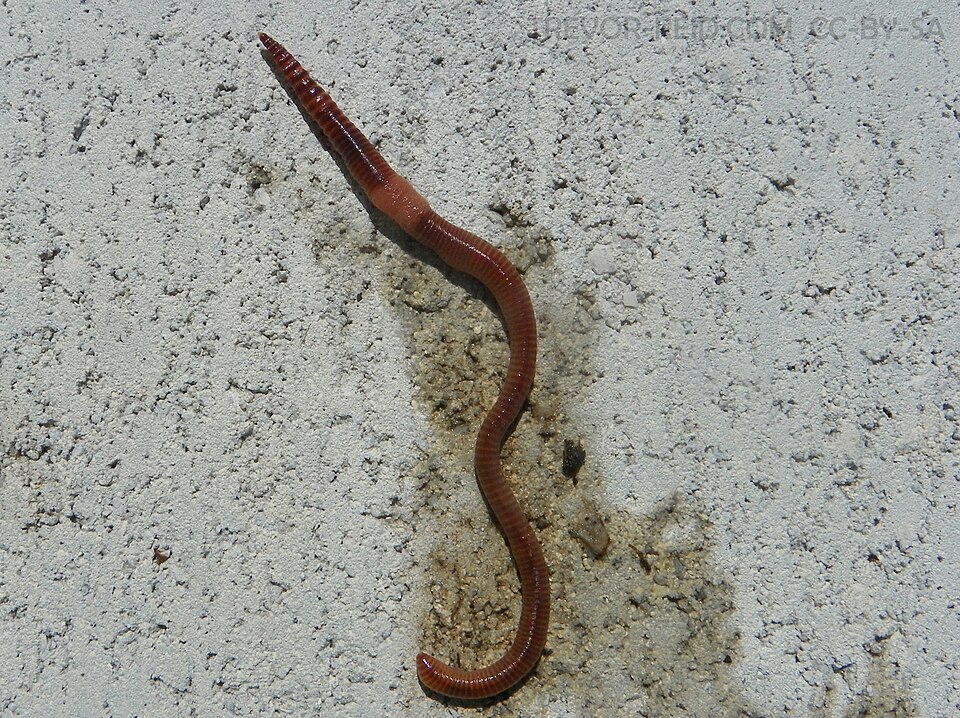
The European nightcrawler is a medium-sized earthworm, blue-pink and grey with stripes and a pale yellow tail tip. It wriggles through rich garden soil and piles of old leaves. It is a hard worker that turns rotting leaves into new soil.
How fast is it?
Fun facts
When it has not eaten for a while, it turns pale pink.
A grown-up worm weighs only about 1.5 grams, less than a small coin.
Every worm is both a boy and a girl at the same time.
It lays little lemon-shaped cocoons. Each one holds one baby worm and turns from pale yellow to brown.
People use it as fishing bait and to make compost, but it should not be let loose in northern forests.
Most asked questions about European nightcrawler
?What does the European nightcrawler eat?
It eats rotting leaves and other dead plant material, which helps make compost and rich soil.
?How long does it take a nightcrawler to grow up?
About 20 weeks from egg to a grown-up worm that can have babies.
For bug experts
- Scientific name
- Dendrobaena hortensis
- Group
- Snails, slugs and worms
- Family
- Lumbricidae
- Classification
- Clitellata > Lumbricidae
- Lives on
- Europe
Where the facts come from
- Dendrobaena hortensis (Wikipedia, CC BY-SA 4.0): what it looks like, where it lives, what it eats, sizes and fun facts, retold in simple words.
- Picture by Trevor Reid. CC BY-SA 4.0, Wikimedia Commons. The round sticker of this bug is cut from the same picture.
If we got something wrong, sorry, we are bug fans, not a science journal. Tell us at [email protected] and we will fix it.
 Garden snail
 Giant African land snail
 Leopard slug
 Bladder snail
 Medicinal leech
 Common earthworm
 Emperor moth
 Orange-tip
 Notch-horned cleg
 Nursery web spider
 Common red ant
 Tiger bee fly