

Inland floodwater mosquito
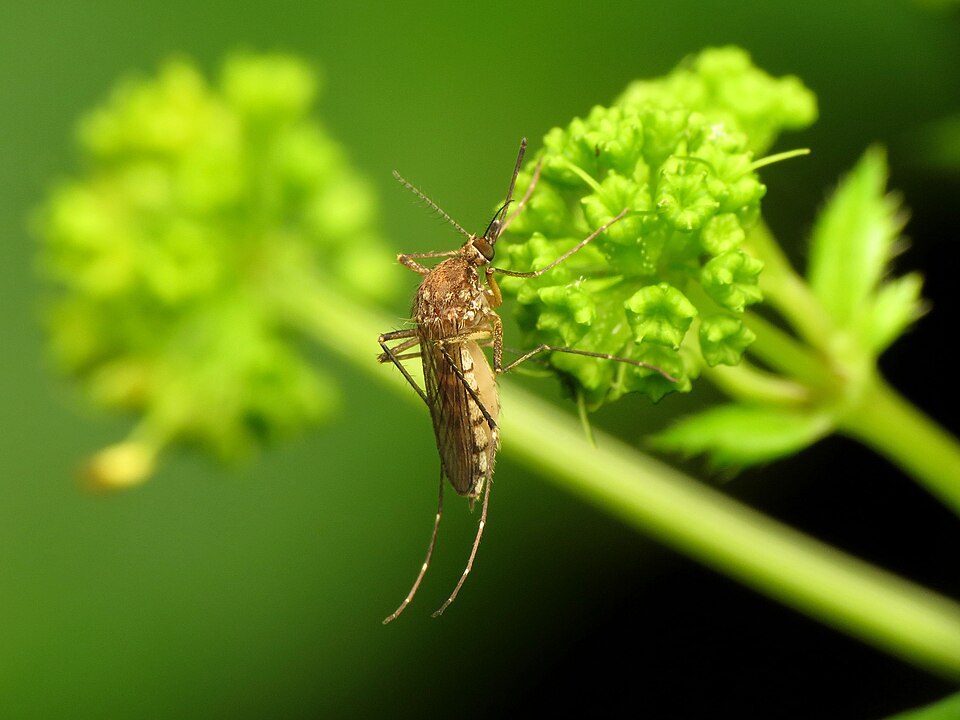
The inland floodwater mosquito is one of the most common mosquitoes in the world. It has little B-shaped markings on the sides of its belly. Its eggs wait in dry ground for a flood, and when the water comes, they hatch.
How fast is it?
Fun facts
In some parts of Europe more than 8 out of 10 mosquitoes are this kind.
On a summer night, a single trap can catch up to 8,000 of them.
Its eggs can wait in the soil for a long time until water floods the spot.
It can spread heartworm to dogs, a sickness that harms their hearts.
The babies live in water from spring to late summer, and the grown-ups fly from May to October.
Most asked questions about Inland floodwater mosquito
?Why are there so many mosquitoes after a flood?
Because this mosquito's eggs lie in dry ground and hatch when water floods them.
For bug experts
- Scientific name
- Aedes vexans
- Group
- Flies and mosquitoes
- Family
- Culicidae
- Classification
- Insecta > Diptera > Culicidae
- Lives on
- North America, Europe, Asia, Africa
- Also known as
- Tomguito
Where the facts come from
- Aedes vexans (Wikipedia, CC BY-SA 4.0): what it looks like, where it lives, what it eats, sizes and fun facts, retold in simple words.
- Picture by Katja Schulz from Washington, D. C., USA. CC BY 2.0, Wikimedia Commons. The round sticker of this bug is cut from the same picture.
If we got something wrong, sorry, we are bug fans, not a science journal. Tell us at [email protected] and we will fix it.
 Housefly
 New World screwworm fly
 Lovebug
 Tsetse fly
 Common fruit fly
 Asian tiger mosquito
 Waterfall centipede
 Globe skimmer
 Wharf roach
 Blue dasher
 Giant petaltail
 Red-veined darter
.jpg)