

Malaysian exploding ant
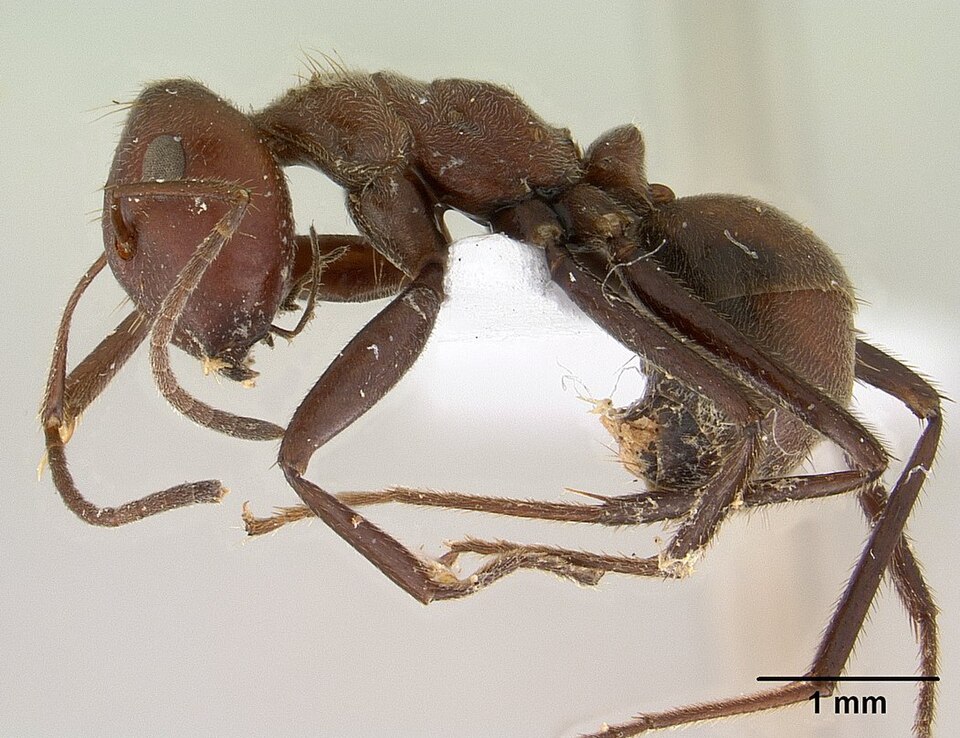
The Malaysian exploding ant lives high in the rainforest trees. When an enemy attacks, a worker ant can burst open and spray sticky glue all over it. The ant gives up its own life to protect its whole family.
How fast is it?
Fun facts
Two huge glue bags run along its whole body, from the head to the end of the tummy.
When it bursts, the glue sprays out of the front of its head and sticks enemies to the spot so they cannot move.
Its biggest enemies are weaver ants, which try to take over its trees.
It is very good at feeling danger. Even a tiny wobble of a leaf makes it alert.
The glue is white in the wet season and turns cream or pale yellow in the dry season.
Most asked questions about Malaysian exploding ant
?Do exploding ants really explode?
Yes. A worker squeezes its tummy so hard that it bursts and sprays sticky glue at the enemy. The worker dies, but its colony is safe.
?Where do exploding ants live?
In the rainforests of Malaysia and Brunei, high up in the trees.
For bug experts
- Scientific name
- Colobopsis saundersi
- Group
- Ants
- Family
- Formicidae
- Classification
- Insecta > Hymenoptera > Formicidae
- Lives on
- Asia
- Also known as
- Suicide ant
Where the facts come from
- Colobopsis saundersi (Wikipedia, CC BY-SA 4.0): what it looks like, where it lives, what it eats, sizes and fun facts, retold in simple words.
- Picture by Noel Tawatao. CC BY 4.0, Wikimedia Commons. The round sticker of this bug is cut from the same picture.
If we got something wrong, sorry, we are bug fans, not a science journal. Tell us at [email protected] and we will fix it.
 Black garden ant
 Bullet ant
 Pharaoh ant
 Argentine ant
 Red imported fire ant
 Yellow crazy ant
 Clipper butterfly
 Wallace's golden birdwing
 Florida whip spider
 Green-banded urania
 Sun beetle
 Royal Goliath beetle