

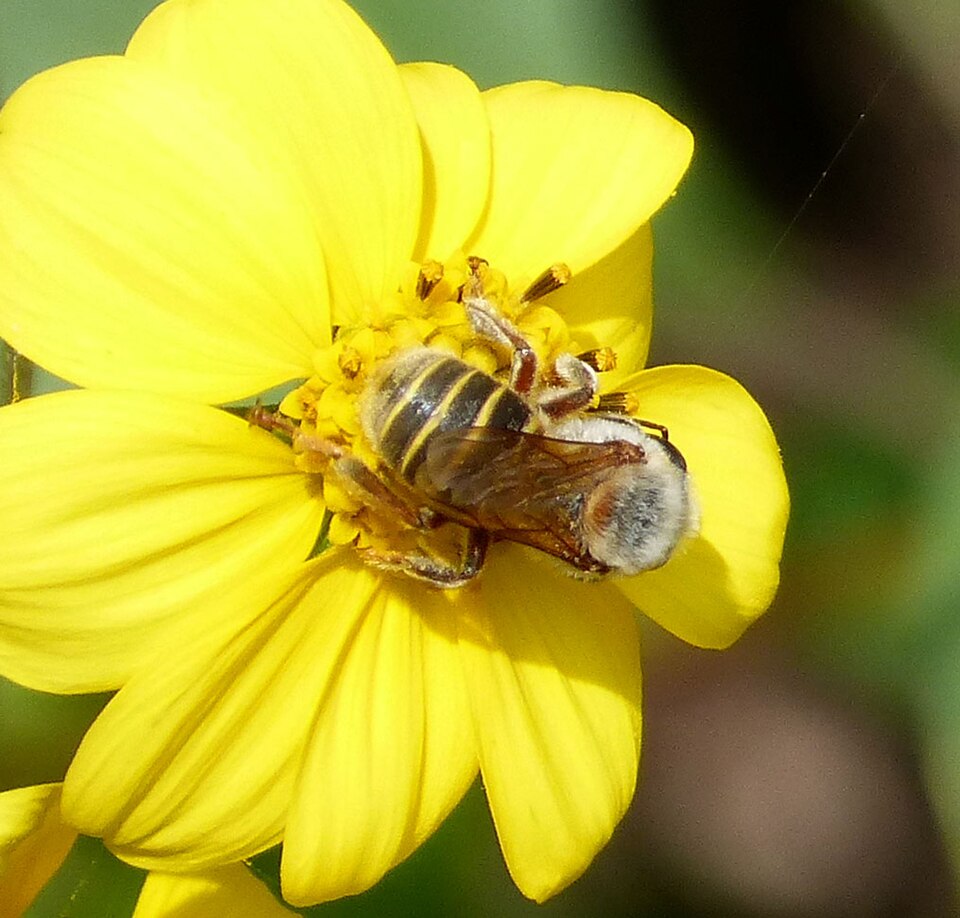
Mayan stingless bee
The ancient Maya people kept it for its honey more than 500 years ago, and it was part of their special ceremonies.
How fast is it?
Fun facts
The queen, the workers and the boys are all about the same size.
It builds its nest inside hollow trees, so cutting down forests takes away its homes.
Beekeepers in one part of Mexico say they have lost almost all of their hives in the last 25 years.
Bees that collect nectar work all day and live only about three days of work. Bees that collect pollen work just a few hours a day and live about 12 days.
Some bees collect only one thing in a day, like pollen, while others collect two or three things.
Most asked questions about Mayan stingless bee
?Why is it called the Mayan bee?
Because the ancient Maya people kept it for honey and used it in their religious ceremonies.
For bug experts
- Scientific name
- Melipona beecheii
- Group
- Bees and bumblebees
- Family
- Apidae
- Classification
- Insecta > Hymenoptera > Apidae
- Lives on
- North America
Where the facts come from
- Melipona beecheii (Wikipedia, CC BY-SA 4.0): what it looks like, where it lives, what it eats, sizes and fun facts, retold in simple words.
- Picture by gailhampshire from Cradley, Malvern, U.K. CC BY 2.0, Wikimedia Commons. The round sticker of this bug is cut from the same picture.
If we got something wrong, sorry, we are bug fans, not a science journal. Tell us at [email protected] and we will fix it.
 Western honey bee
 Buff-tailed bumblebee
 Violet carpenter bee
 Giant honey bee
 Wallace's giant bee
 Himalayan giant honey bee
 Kauai cave wolf spider
 Great Mormon
 Giant rainforest mantis
 Paper kite butterfly
 Leafcutter ant
 Giant cicada