

Patagonian bumblebee
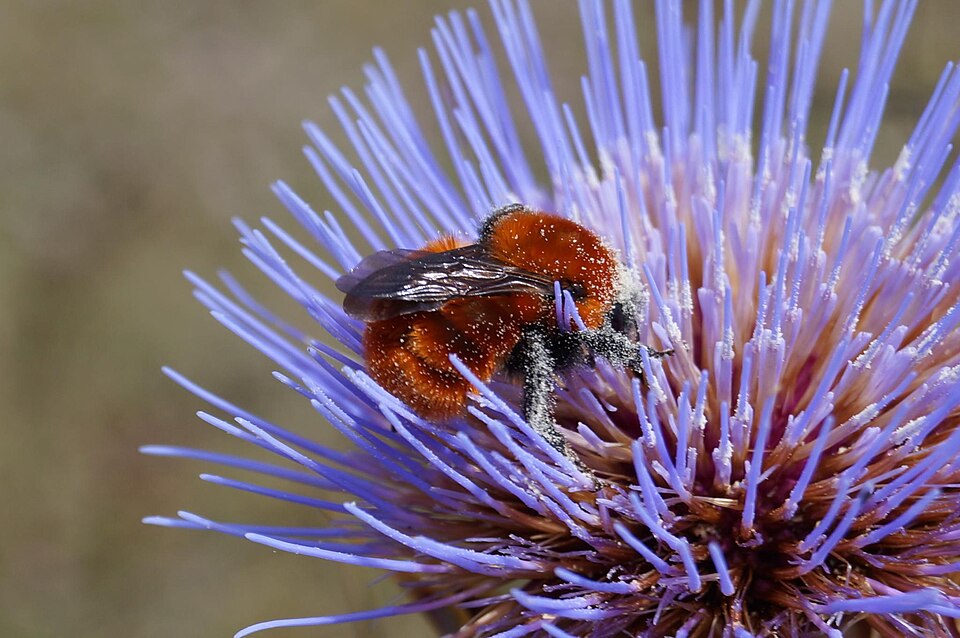
The Patagonian bumblebee is a huge, fluffy, ginger bumblebee with a black head, black legs and dark wings. It is so big and furry that people call it the flying mouse. It is one of the biggest bees in the whole world.
How fast is it?
Fun facts
A queen can be up to 4 centimetres long. That is about as long as your thumb.
It is the only bumblebee that has always lived in the south of South America.
Most bees cannot see the colour red, but this one often visits red flowers anyway.
The queen starts her nest in spring in a hole underground, often an old mouse burrow.
It is becoming rare because bumblebees from Europe were brought to its home and spread a germ that makes it sick.
Most asked questions about Patagonian bumblebee
?How big is the Patagonian bumblebee?
Queens can grow up to about 4 centimetres long, which makes it one of the biggest bees in the world.
?Why is it called the flying mouse?
Because it is so big, round and furry that it looks a bit like a little mouse with wings.
For bug experts
- Scientific name
- Bombus dahlbomii
- Named by
- Guérin-Méneville, 1835
- Group
- Bees and bumblebees
- Family
- Apidae
- Classification
- Insecta > Hymenoptera > Apidae
- Lives on
- South America
- Also known as
- Moscardón, Mangangá, Flying mouse
Where the facts come from
- Bombus dahlbomii (Wikipedia, CC BY-SA 4.0): what it looks like, where it lives, what it eats, sizes and fun facts, retold in simple words.
- Picture by Pato Novoa. CC BY 2.0, Wikimedia Commons. The round sticker of this bug is cut from the same picture.
If we got something wrong, sorry, we are bug fans, not a science journal. Tell us at [email protected] and we will fix it.
 Western honey bee
 Buff-tailed bumblebee
 Violet carpenter bee
 Giant honey bee
 Wallace's giant bee
 Himalayan giant honey bee
 Stag beetle
 Luna moth
 Northern giant hornet
 Western conifer seed bug
 Rosy maple moth
 Dark fishing spider