

Saharan silver ant
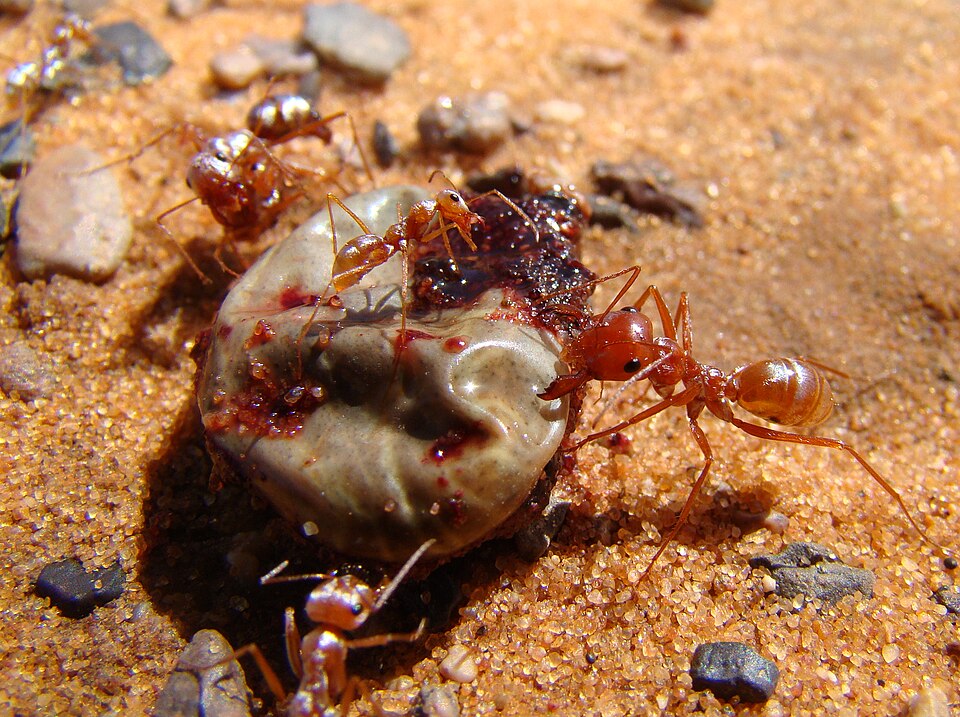
The Saharan silver ant lives in the hottest sand of the Sahara Desert. It is covered in shiny silver hairs that bounce the sunlight away. It is the fastest ant in the world and dashes across the sand like a tiny race car.
How fast is it?
Fun facts
It can run almost a metre in one second, about 108 times its own body length.
When it runs really fast, it lifts its front legs and runs on only four legs.
It goes out of its nest for only about ten minutes a day, in the hottest part of the day when hungry lizards hide from the heat.
It uses the sun like a compass to always find the quickest way home.
Before it leaves the nest, its body gets ready for the heat, so it can survive temperatures over 50 degrees.
Most asked questions about Saharan silver ant
?How fast is the Saharan silver ant?
It runs about 85 centimetres per second, which makes it the fastest of all known ants.
?How does the silver ant survive the heat?
Its silver hairs reflect sunlight and help it give off heat, and it only goes out for a few minutes at a time.
?Why is the Saharan silver ant silver?
It is covered in special triangle-shaped hairs that shine like silver and keep it cool.
For bug experts
- Scientific name
- Cataglyphis bombycina
- Group
- Ants
- Family
- Formicidae
- Classification
- Insecta > Hymenoptera > Formicidae
- Lives on
- Africa
Where the facts come from
- Saharan silver ant (Wikipedia, CC BY-SA 4.0): what it looks like, where it lives, what it eats, sizes and fun facts, retold in simple words.
- Picture by Bjørn Christian Tørrissen. CC BY-SA 3.0, Wikimedia Commons. The round sticker of this bug is cut from the same picture.
If we got something wrong, sorry, we are bug fans, not a science journal. Tell us at [email protected] and we will fix it.
 Black garden ant
 Bullet ant
 Pharaoh ant
 Argentine ant
 Red imported fire ant
 Yellow crazy ant
 Desert blonde tarantula
 Master blister beetle
 Costa Rican zebra tarantula
 Ghost mantis
 Red-headed mouse spider
 Koppie foam grasshopper