

Spruce budworm
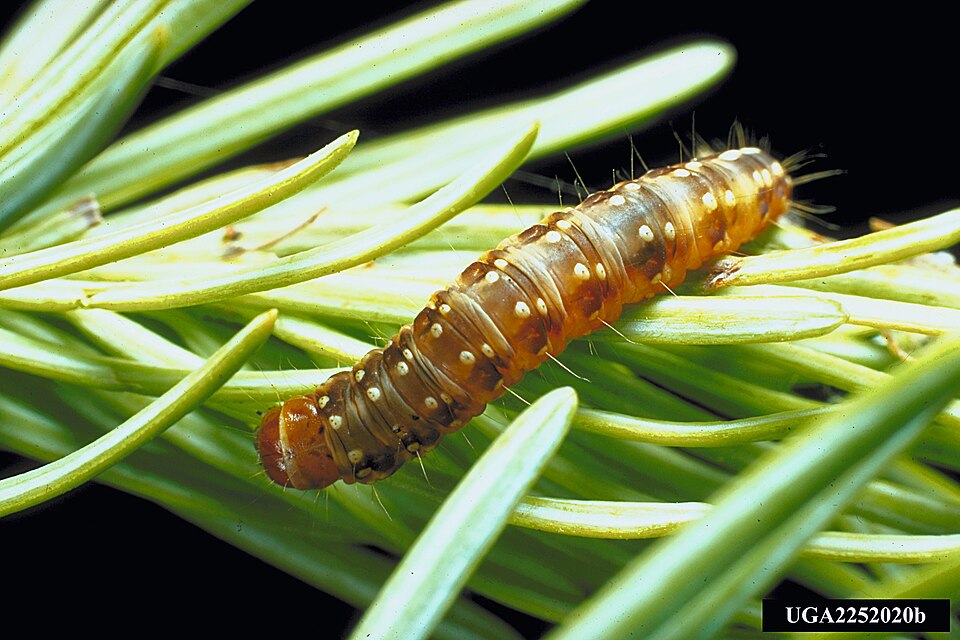
The spruce budworm is a small moth from the big forests of North America. Its caterpillars munch the fresh new needles of fir and spruce trees. Every few decades there are so many of them that they can harm whole forests.
How fast is it?
Fun facts
Big outbreaks come back about every 30 years. Tree rings show this has been happening since the 1500s.
In Canada, one outbreak can damage millions of hectares of forest.
Some forest birds feed their chicks mostly on budworm caterpillars.
It is one of the worst forest pests in North America, but it is also an important food for wildlife.
Most asked questions about Spruce budworm
?What does the spruce budworm eat?
Its caterpillars eat the new needles of fir and spruce trees.
?Why is the spruce budworm a problem?
Every few decades there are huge numbers of them, and they can kill many trees.
?Where does the spruce budworm live?
In the spruce and fir forests of the eastern United States and Canada.
For bug experts
- Scientific name
- Choristoneura fumiferana
- Named by
- Clemens, 1865
- Group
- Moths
- Family
- Tortricidae
- Classification
- Insecta > Lepidoptera > Tortricidae
- Lives on
- North America
- Also known as
- Eastern spruce budworm
Where the facts come from
- Choristoneura fumiferana (Wikipedia, CC BY-SA 4.0): what it looks like, where it lives, what it eats, sizes and fun facts, retold in simple words.
- Picture by Jerald E. Dewey, USDA Forest Service, United States. Public domain, Wikimedia Commons. The round sticker of this bug is cut from the same picture.
If we got something wrong, sorry, we are bug fans, not a science journal. Tell us at [email protected] and we will fix it.
 Atlas moth
 Luna moth
 Hummingbird hawk-moth
 Domestic silk moth
 Isabella tiger moth
 Polyphemus moth
 Pellucid fly
 New Forest cicada
 Ringlet butterfly
 Double drummer
 Winter firefly
 Musk beetle