

Western thatching ant
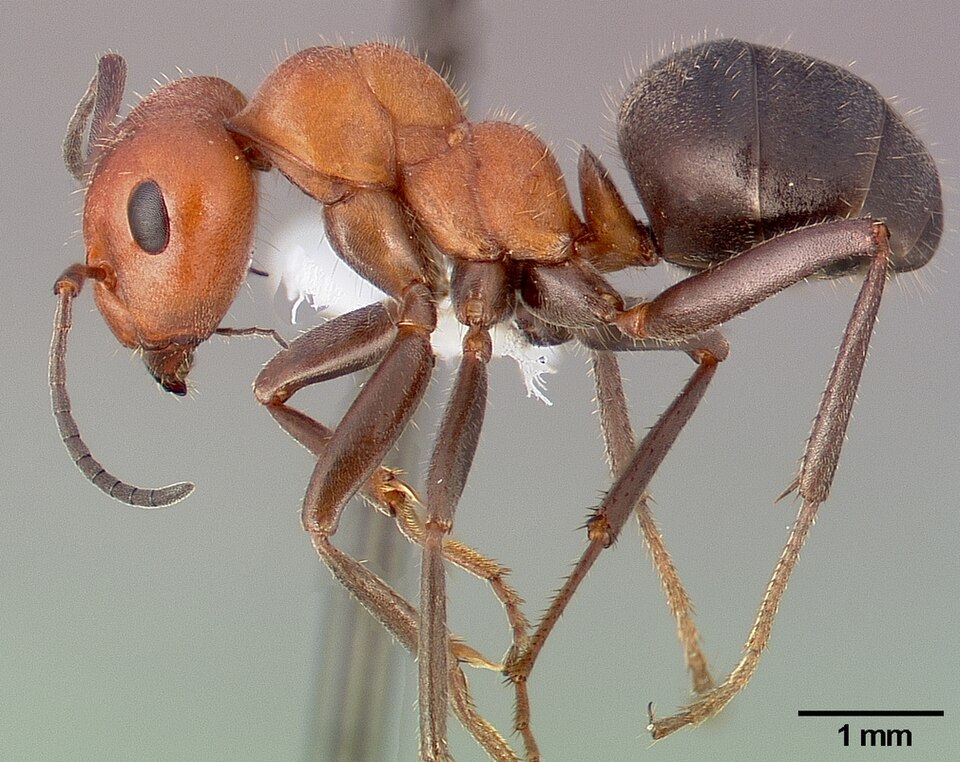
The western thatching ant is a builder. Its workers pile up little bits of plants into a big dome-shaped hill called thatch. The hill sits in a sunny spot, and the ants keep fixing and changing it all the time.
How fast is it?
Fun facts
Its hill can be up to about 46 centimetres tall, and the nest goes more than a metre down into the ground.
One colony can have up to 40,000 workers.
If a plant shades its hill, the ants chew off the bark and spray acid until the plant dies and falls.
In Oregon, scientists found a giant group of 210 connected nests with more than 56 million ants.
Most asked questions about Western thatching ant
?What does the western thatching ant eat?
Insects, sweet juice from little plant-sucking bugs, and sometimes bits of plants.
?Why is it called a thatching ant?
Because it covers its hill with small pieces of plants, a bit like a thatched roof.
For bug experts
- Scientific name
- Formica obscuripes
- Group
- Ants
- Family
- Formicidae
- Classification
- Insecta > Hymenoptera > Formicidae
- Lives on
- North America
Where the facts come from
- Formica obscuripes (Wikipedia, CC BY-SA 4.0): what it looks like, where it lives, what it eats, sizes and fun facts, retold in simple words.
- Picture by April Nobile. CC BY 4.0, Wikimedia Commons. The round sticker of this bug is cut from the same picture.
If we got something wrong, sorry, we are bug fans, not a science journal. Tell us at [email protected] and we will fix it.
 Black garden ant
 Bullet ant
 Pharaoh ant
 Argentine ant
 Red imported fire ant
 Yellow crazy ant
 Tarnished plant bug
 Garden slug
 Silvery blue
 Hebrew character
 Twenty-eight-spotted potato ladybird
 Springbok mantis