
Eastern striped cricket
Miogryllus verticalis

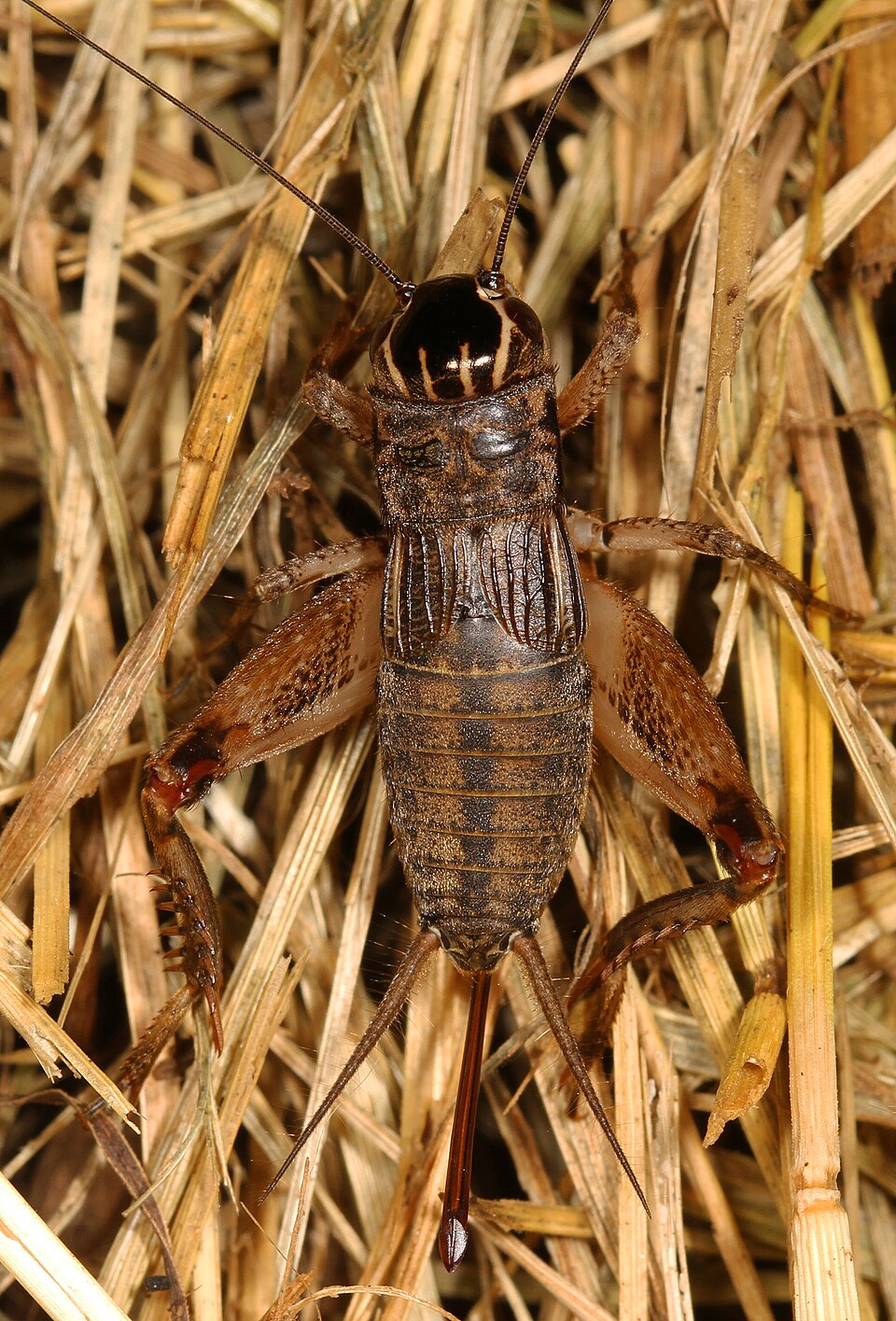
The eastern striped cricket is a field cricket from the Americas. Field crickets live on the ground in grassy places. On warm evenings the males sing by rubbing their wings together.
Lives in
Eastern North America, Central America and South America
Can it hurt you?
Harmless
Harmless. It cannot sting, and it would rather hop away than bite.
What does it eat?
Like other field crickets, it nibbles plants and also eats small insects and leftovers.
How fast is it?
Eastern striped cricket about 3 km/h (1.9 mph)
A person walking about 5 km/h (3.1 mph)
A kid running fast about 13 km/h (8.1 mph)
A grown-up on a bike about 25 km/h (16 mph)
cool stuff
Fun facts
1
Crickets have their ears on their front legs, just below the knees.
2
Scientists once thought there were two kinds of it, but now they know they are the same cricket.
3
It lives all the way from eastern North America down to South America.
you asked
Most asked questions about Eastern striped cricket
?How does the eastern striped cricket sing?
The male rubs his wings together to make a chirping sound.
?Is the eastern striped cricket dangerous?
No. It is harmless to people.
For bug experts
- Scientific name
- Miogryllus verticalis
- Group
- Grasshoppers and crickets
- Family
- Gryllidae
- Classification
- Insecta > Orthoptera > Gryllidae
- Lives on
- North America, South America
Where the facts come from
- Miogryllus verticalis (Wikipedia, CC BY-SA 4.0): what it looks like, where it lives, what it eats, sizes and fun facts, retold in simple words.
- Picture by Judy Gallagher. CC BY 2.0, Wikimedia Commons. The sticker of this bug is drawn from this picture.
If we got something wrong, sorry, we are bug fans, not a science journal. Tell us at [email protected] and we will fix it.
Bug Wiki honey jar For grown-ups: Bug Wiki is free, with no ads and no tracking. A small tip helps keep it online.Leave a tip Desert locust
 House cricket
 Parktown prawn
 Eastern lubber grasshopper
 Australian plague locust
 Mormon cricket
 Southern California shoulderband
 Spotted bee fly
 Natal droptail ant
 Belted grass-veneer
 Sitka bumble bee
 Three-spined grass bug