
Putnam's cicada

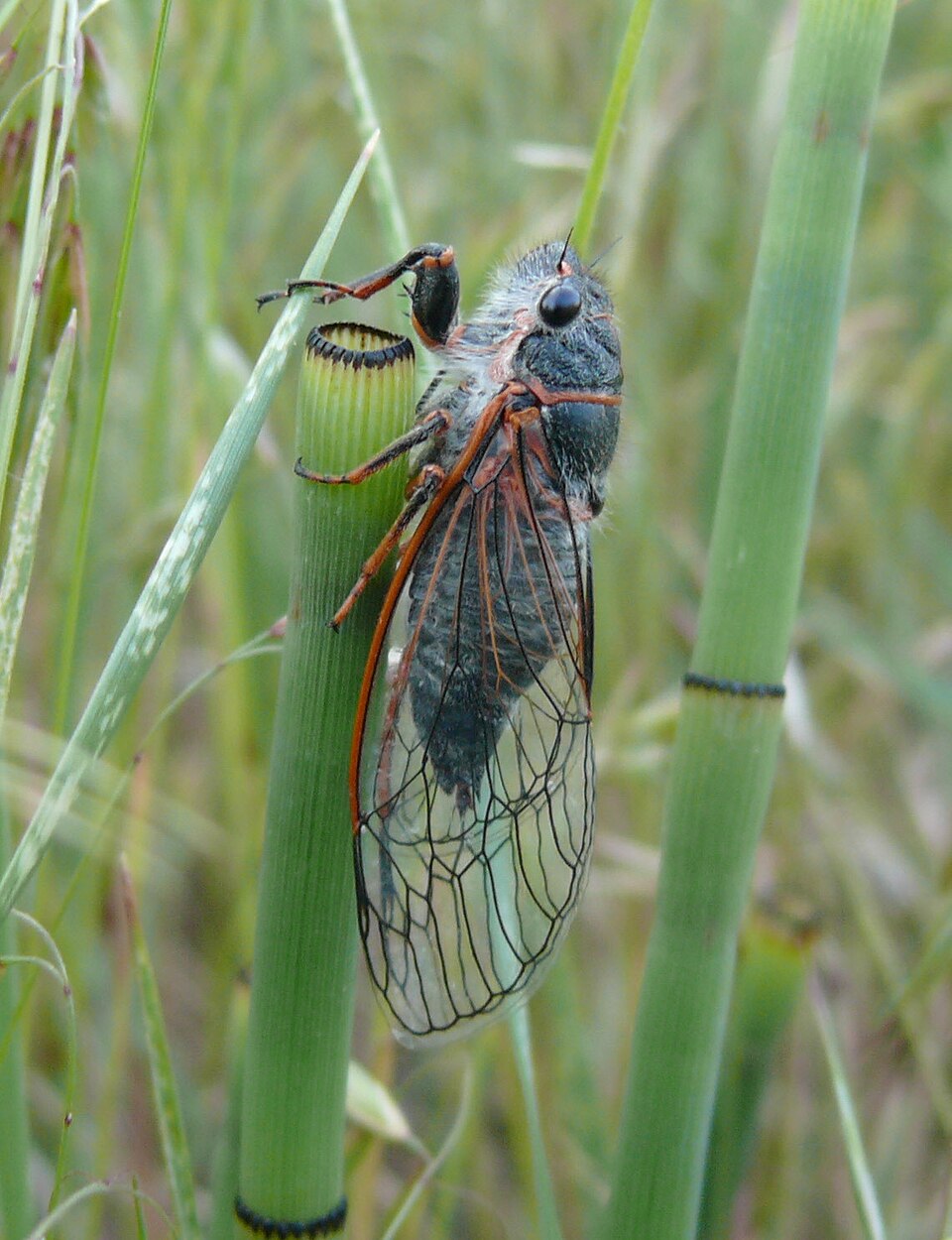
Putnam's cicada is a cicada that lives in North America. Cicadas are chunky insects with big, clear wings folded like a roof over their backs. They drink plant sap through a mouth shaped like a tiny straw.
How fast is it?
Fun facts
Scientists split it into four groups, called subspecies, that look a little different from each other.
Three of these subspecies were named by the same scientist, Davis, in 1920.
Cicada young hatch from eggs on plants, drop to the ground and live underground for a long time before they climb out as grown-ups.
Most asked questions about Putnam's cicada
?Is Putnam's cicada dangerous?
No. Cicadas cannot sting and do not bite people.
?What does a cicada eat?
Cicadas drink sap from plants. The young ones drink it from roots underground.
For bug experts
- Scientific name
- Platypedia putnami
- Named by
- Uhler, 1877
- Group
- True bugs and cicadas
- Family
- Cicadidae
- Classification
- Insecta > Hemiptera > Cicadidae
- Lives on
- North America
Where the facts come from
- Platypedia putnami (Wikipedia, CC BY-SA 4.0): what it looks like, where it lives, what it eats, sizes and fun facts, retold in simple words.
- Picture by xpda. CC BY-SA 4.0, Wikimedia Commons. The sticker of this bug is drawn from this picture.
If we got something wrong, sorry, we are bug fans, not a science journal. Tell us at [email protected] and we will fix it.
Bug Wiki honey jar For grown-ups: Bug Wiki is free, with no ads and no tracking. A small tip helps keep it online.Leave a tip Pharaoh cicada
 Spotted lanternfly
 Brown marmorated stink bug
 Cochineal
 Boxelder bug
 Western conifer seed bug
 Purple emperor
 Huhu beetle
 Indian ornamental tarantula
 Banded sugar ant
 Puss moth
 Red dwarf honey bee