

Bug card No. 0770 of 1,500
Indian ornamental tarantula
Poecilotheria regalis
Name means: “spotted wild beast that is royal”
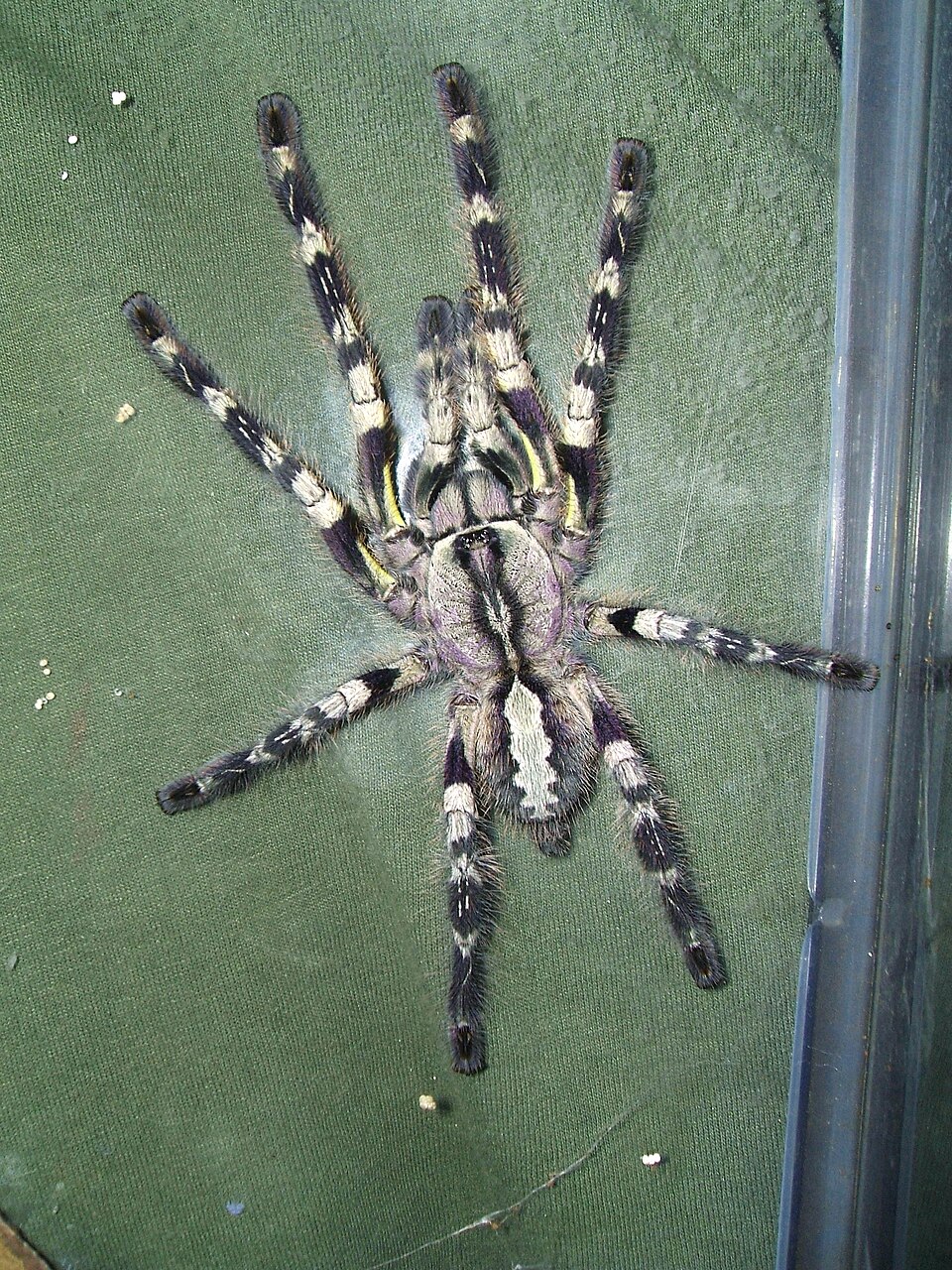
The Indian ornamental tarantula is a big tree-living spider from India with a beautiful pattern on its body, like fancy lace. It lives in holes high up in tall trees. It is very fast and catches insects right out of the air.
Fun fact: spiders are not insects. Insects have six legs, spiders have eight. Everyone calls them bugs anyway!
Lives in
Mainly south-eastern India, in holes in tall trees
How fast is it?
A tortoise about 0.3 km/h (0.19 mph)
Indian ornamental tarantula about 1.5 km/h (0.93 mph)
A person walking about 5 km/h (3.1 mph)
A kid running fast about 13 km/h (8.1 mph)
cool stuff
Fun facts
1
Its legs can spread more than 18 centimetres, as wide as a big hand with fingers spread.
2
It builds a funnel-shaped web inside its tree hole.
3
When there are not enough tree holes, several of these spiders may live together.
4
A girl spider can live more than 12 years, while the boys usually live 3 to 5 years.
you asked
Most asked questions about Indian ornamental tarantula
?Where does the Indian ornamental tarantula live?
In holes in tall trees, mainly in south-eastern India.
?How big is the Indian ornamental tarantula?
Its legs can spread more than 18 centimetres.
For bug experts
- Scientific name
- Poecilotheria regalis
- Group
- Spiders
- Family
- Theraphosidae
- Classification
- Arachnida > Araneae > Theraphosidae
- Lives on
- Asia
- Also known as
- Indian ornamental tree spider, Indian ornamental
Where the facts come from
- Poecilotheria regalis (Wikipedia, CC BY-SA 4.0): what it looks like, where it lives, what it eats, sizes and fun facts, retold in simple words.
- Picture by Morkelsker. Public domain, Wikimedia Commons. The round sticker of this bug is cut from the same picture.
If we got something wrong, sorry, we are bug fans, not a science journal. Tell us at [email protected] and we will fix it.
 European garden spider
 Goliath birdeater
 Brown recluse
 Redback spider
 Yellow garden spider
 Bold jumping spider
 Bald-faced hornet
 Cecropia moth
 Emerald ash borer
 Japanese rhinoceros beetle
 Australian paralysis tick
 Ten-lined June beetle