
Zebra tick

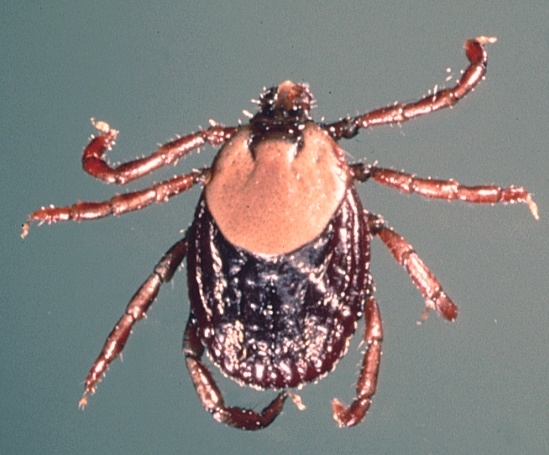
The zebra tick is a hard tick from East Africa. The male has a black and ivory-white pattern on its back, a bit like a zebra. It drinks the blood of many big animals, from zebras and giraffes to cows and camels.
Ticks: how to stay safe
- In Estonia, the castor bean tick and the taiga tick can carry Lyme disease and tick-borne encephalitis.
- Ticks wait on grass stems, from ankle to knee height. Long trousers tucked into socks and light clothes help you spot them.
- After playing outside, check your body, your hair and your pets for ticks.
- Found a tick? A grown-up should take it out quickly with fine tweezers or a tick tool: hold it close to the skin and pull slowly. No oil or alcohol on it. Then wash the spot.
- There is a vaccine against tick-borne encephalitis, for children too from one year old. Ask your doctor.
- If in the weeks after a bite you get a fever, feel ill or see a red patch that grows, go to a doctor.
How fast is it?
Fun facts
In one study in Kenya, hundreds of zebra ticks were found on Masai giraffes.
In some parts of Ethiopia, 9 out of 10 ticks found on cows and camels are zebra ticks.
A bird called the red-billed oxpecker likes to eat these ticks.
It even lives on elephants, baboons and sometimes ostriches.
The male's patterned back shield is only about 4 millimetres long.
Most asked questions about Zebra tick
?Why is it called the zebra tick?
The male has a black and white pattern on its back, and zebras are one of its favourite hosts.
?What eats the zebra tick?
The red-billed oxpecker, a bird that picks ticks off big animals.
For bug experts
- Scientific name
- Rhipicephalus pulchellus
- Named by
- Gerstaecker
- Group
- Scorpions, ticks and friends
- Family
- Ixodidae
- Classification
- Arachnida > Ixodida > Ixodidae
- Lives on
- Africa
- Also known as
- Yellow back tick, Yellow-backed tick
Where the facts come from
- Rhipicephalus pulchellus (Wikipedia, CC BY-SA 4.0): what it looks like, where it lives, what it eats, sizes and fun facts, retold in simple words.
- Picture by Daktaridudu. CC BY-SA 4.0, Wikimedia Commons. The sticker of this bug is drawn from this picture.
If we got something wrong, sorry, we are bug fans, not a science journal. Tell us at [email protected] and we will fix it.
Bug Wiki honey jar For grown-ups: Bug Wiki is free, with no ads and no tracking. A small tip helps keep it online.Leave a tip Emperor scorpion
 Lone star tick
 Deathstalker
 Itch mite
 Eyelash mite
 Deer tick
 Oak eggar
 Dock bug
 Anise swallowtail
 Insidious flower bug
 Striped shield bug
 Australian bush fly