

Bug card No. 0390 of 1,500
Deathstalker
Leiurus quinquestriatus
Name means: “its scientific name means five-striped smooth tail”
Eats: Other bugs and small animalsScorpions, ticks and friendsDeserts and dry places8 legsNot an insect, but a bug cousin
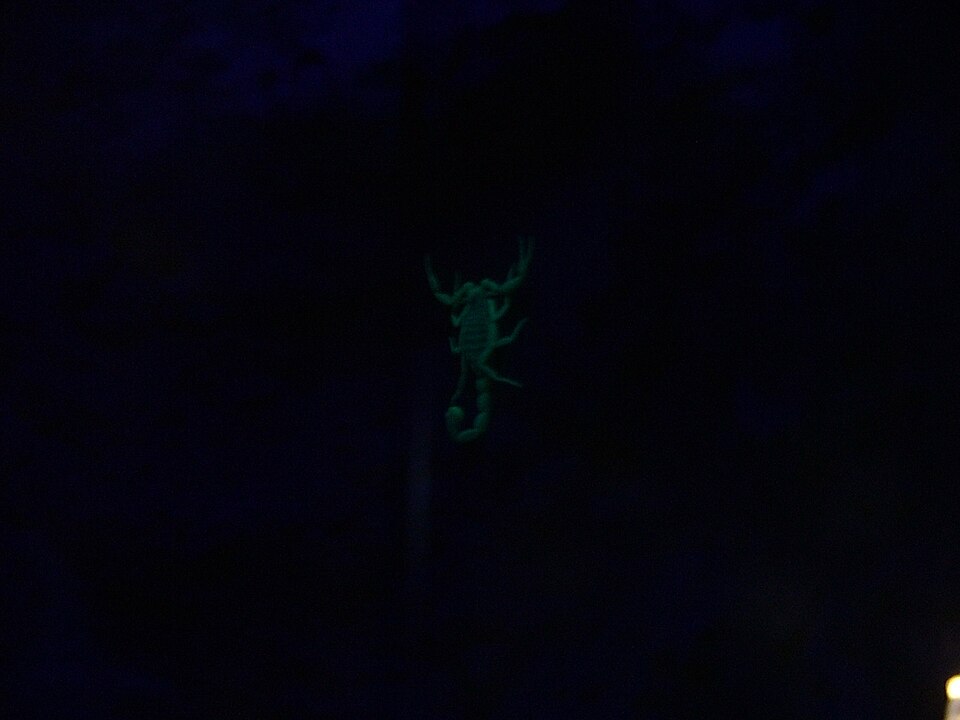
The deathstalker is a pale yellow scorpion that lives in hot deserts.
Fun fact: this one is not an insect. It is an arachnid with eight legs, a cousin of the spiders.
Lives in
North Africa and the Middle East to Central Asia and western India, in deserts and dry scrubland
Length
3 to 7.7 cm (1.2 to 3 in)
What does it eat?
Like all scorpions it is a hunter.
How big is it?
How long is it?
🧱as long as 2.5 toy building bricks in a row🍽️could run across a dinner table in 1.2 seconds
How big is Deathstalker compared to YOU?
Just maths in your browser. Nothing is saved or sent anywhere.
How fast is it?
Deathstalker about 3 km/h (1.9 mph)
A person walking about 5 km/h (3.1 mph)
A kid running fast about 13 km/h (8.1 mph)
A grown-up on a bike about 25 km/h (16 mph)
cool stuff
Fun facts
1
Its tail is long and smooth, and its name means five-striped smooth tail.
2
In many countries you are not allowed to keep one as a pet.
you asked
Most asked questions about Deathstalker
?How big is a deathstalker?
It is 30 to 77 millimetres long, on average about 6 centimetres.
?Where do deathstalkers live?
In deserts and dry lands from North Africa through the Middle East to Central Asia and India.
For bug experts
- Scientific name
- Leiurus quinquestriatus
- Group
- Scorpions, ticks and friends
- Family
- Buthidae
- Classification
- Arachnida > Scorpiones > Buthidae
- Lives on
- Africa, Asia
- Also known as
- Palestine yellow scorpion, Omdurman scorpion, Naqab desert scorpion
Where the facts come from
- Deathstalker (Wikipedia, CC BY-SA 4.0): what it looks like, where it lives, what it eats, sizes and fun facts, retold in simple words.
- Picture by SuperJew. CC BY-SA 3.0, Wikimedia Commons. The round sticker of this bug is cut from the same picture.
If we got something wrong, sorry, we are bug fans, not a science journal. Tell us at [email protected] and we will fix it.
 Emperor scorpion
 Lone star tick
 Itch mite
 Eyelash mite
 Deer tick
 Arizona bark scorpion
 European beewolf
 Dancing white lady spider
 Alkali bee
 Two-tailed pasha
 Red-banded sand wasp
 Painted grasshopper