
Brazilian orange-banded tarantula
Acanthoscurria juruenicola
Eats: Other bugs and small animalsSpidersRainforests and jungles8 legsNot an insect, but a bug cousin

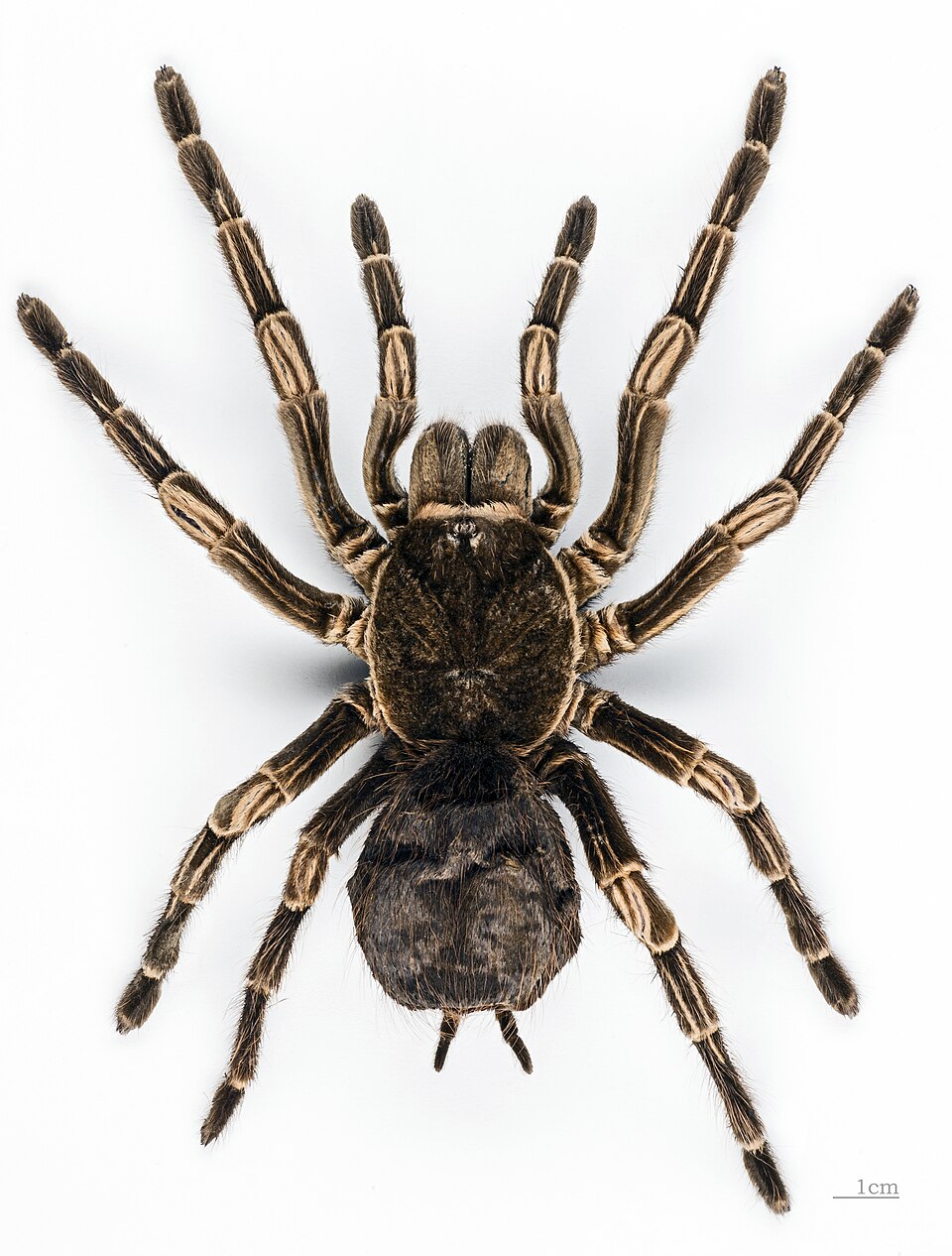
The Brazilian orange-banded tarantula is a big, hairy tarantula from Brazil. It lives on the ground, not up in the trees. It likes it warm and quite damp.
Fun fact: spiders are not insects. Insects have six legs, spiders have eight. Everyone calls them bugs anyway!
Lives in
Brazil, on the ground in warm, damp places
What does it eat?
Like other tarantulas, it hunts insects and other small animals on the ground.
How fast is it?
A tortoise about 0.3 km/h (0.19 mph)
Brazilian orange-banded tarantula about 1.5 km/h (0.93 mph)
A person walking about 5 km/h (3.1 mph)
A kid running fast about 13 km/h (8.1 mph)
cool stuff
Fun facts
1
It can grow to about 18 centimetres in size. How big it gets depends on whether it is a male or a female, and where it lives.
2
It likes temperatures of about 24 to 29 degrees, with air that is quite damp.
3
It is not often kept as a pet.
you asked
Most asked questions about Brazilian orange-banded tarantula
?How big does the Brazilian orange-banded tarantula get?
It can reach about 18 centimetres in size.
For bug experts
- Scientific name
- Acanthoscurria juruenicola
- Group
- Spiders
- Family
- Theraphosidae
- Classification
- Arachnida > Araneae > Theraphosidae
- Lives on
- South America
Where the facts come from
- Acanthoscurria juruenicola (Wikipedia, CC BY-SA 4.0): what it looks like, where it lives, what it eats, sizes and fun facts, retold in simple words.
- Picture by Didier Descouens. CC BY-SA 4.0, Wikimedia Commons. The sticker of this bug is drawn from this picture.
If we got something wrong, sorry, we are bug fans, not a science journal. Tell us at [email protected] and we will fix it.
Bug Wiki honey jar For grown-ups: Bug Wiki is free, with no ads and no tracking. A small tip helps keep it online.Leave a tip European garden spider
 Goliath birdeater
 Brown recluse
 Redback spider
 Yellow garden spider
 Bold jumping spider
 Metallic stag beetle
 Sun beetle
 Javanese grasshopper
 Goliath birdwing
 Red Helen swallowtail
 Black-edged bark scorpion