
Blue-fang skeleton tarantula
Ephebopus cyanognathus
Name means: “blue jaw”
Eats: Other bugs and small animalsSpidersRainforests and jungles8 legsNot an insect, but a bug cousin

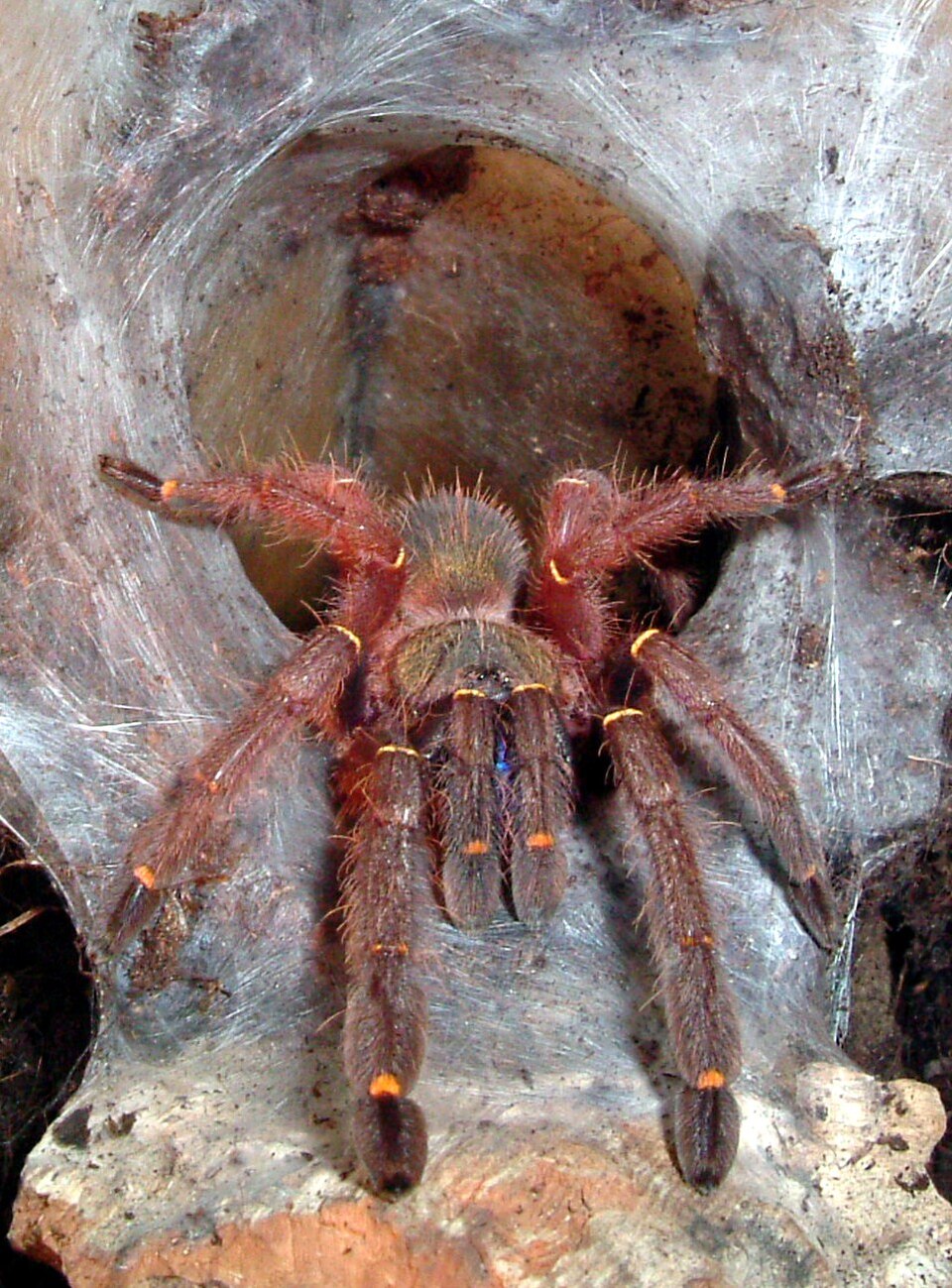
Its jaws are a bright, beautiful blue. It also has shiny golden rings on its legs.
Fun fact: spiders are not insects. Insects have six legs, spiders have eight. Everyone calls them bugs anyway!
Lives in
French Guiana in South America, in warm, rainy forests
What does it eat?
Like other tarantulas, it eats insects and other small animals that come near its burrow.
How fast is it?
A tortoise about 0.3 km/h (0.19 mph)
Blue-fang skeleton tarantula about 1.5 km/h (0.93 mph)
A person walking about 5 km/h (3.1 mph)
A kid running fast about 13 km/h (8.1 mph)
cool stuff
Fun facts
1
Grown-up males do not have the blue jaws. They are purple instead.
2
It digs a burrow and builds up the entrance with bits it finds, so it sticks out a few centimetres above the ground.
3
Young ones are very nervous, but they get calmer as they grow older.
4
Where it lives, about 4 metres of rain falls in a year.
For bug experts
- Scientific name
- Ephebopus cyanognathus
- Named by
- West & Marshall, 2000
- Group
- Spiders
- Family
- Theraphosidae
- Classification
- Arachnida > Araneae > Theraphosidae
- Lives on
- South America
- Also known as
- Blue fang tarantula
Where the facts come from
- Ephebopus cyanognathus (Wikipedia, CC BY-SA 4.0): what it looks like, where it lives, what it eats, sizes and fun facts, retold in simple words.
- Picture by unknown author. CC BY-SA 3.0, Wikimedia Commons. The sticker of this bug is drawn from this picture.
If we got something wrong, sorry, we are bug fans, not a science journal. Tell us at [email protected] and we will fix it.
Bug Wiki honey jar For grown-ups: Bug Wiki is free, with no ads and no tracking. A small tip helps keep it online.Leave a tip European garden spider
 Goliath birdeater
 Brown recluse
 Redback spider
 Yellow garden spider
 Bold jumping spider
 Blinking snail
 Ceiba borer
 Yam hawkmoth
 Owl moth
 Apple-green swallowtail
 Five-bar swordtail