
Sandalwood defoliator

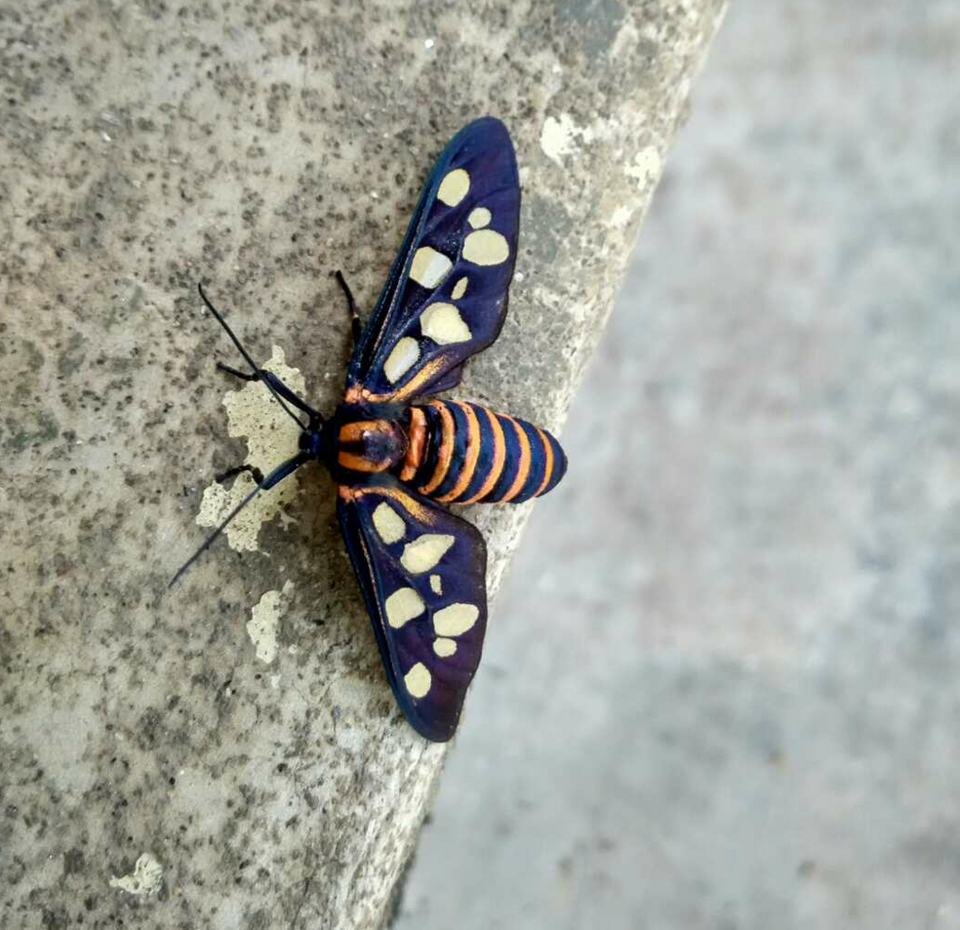
The sandalwood defoliator is a moth from India and Sri Lanka. Its caterpillars are so hungry that they can strip the leaves off sandalwood trees. It grows up very fast and has many families every year.
How fast is it?
Fun facts
A female lays about 300 eggs, even though she lives only about four days as a moth.
It can have 6 to 11 families in one year, because it breeds all year round.
Its caterpillar grows from about 2 millimetres to almost 3 centimetres long, and changes its skin many times on the way.
The grown-up moths usually come out of their cocoons within two hours after sunrise.
Most asked questions about Sandalwood defoliator
?What does the sandalwood defoliator eat?
Its caterpillars eat sandalwood leaves, and also beans, cowpeas and chilli plants.
?What does defoliator mean?
A defoliator is an animal that eats so many leaves that a plant ends up bare.
For bug experts
- Scientific name
- Amata passalis
- Named by
- Fabricius, 1781
- Group
- Moths
- Family
- Erebidae
- Classification
- Insecta > Lepidoptera > Erebidae
- Lives on
- Asia
Where the facts come from
- Amata passalis (Wikipedia, CC BY-SA 4.0): what it looks like, where it lives, what it eats, sizes and fun facts, retold in simple words.
- Picture by Skydoc28. CC BY-SA 4.0, Wikimedia Commons. The sticker of this bug is drawn from this picture.
If we got something wrong, sorry, we are bug fans, not a science journal. Tell us at [email protected] and we will fix it.
Bug Wiki honey jar For grown-ups: Bug Wiki is free, with no ads and no tracking. A small tip helps keep it online.Leave a tip Atlas moth
 Luna moth
 Hummingbird hawk-moth
 Domestic silk moth
 Isabella tiger moth
 Polyphemus moth
 Yellow sac spider
 Red cotton stainer
 Western yellowjacket
 Spotted pink ladybird
 Silverleaf whitefly
 Gatekeeper butterfly