
Cape docile scorpion
Opisthacanthus capensis
Eats: Other bugs and small animalsScorpions, ticks and friendsForests and woods8 legsNot an insect, but a bug cousin

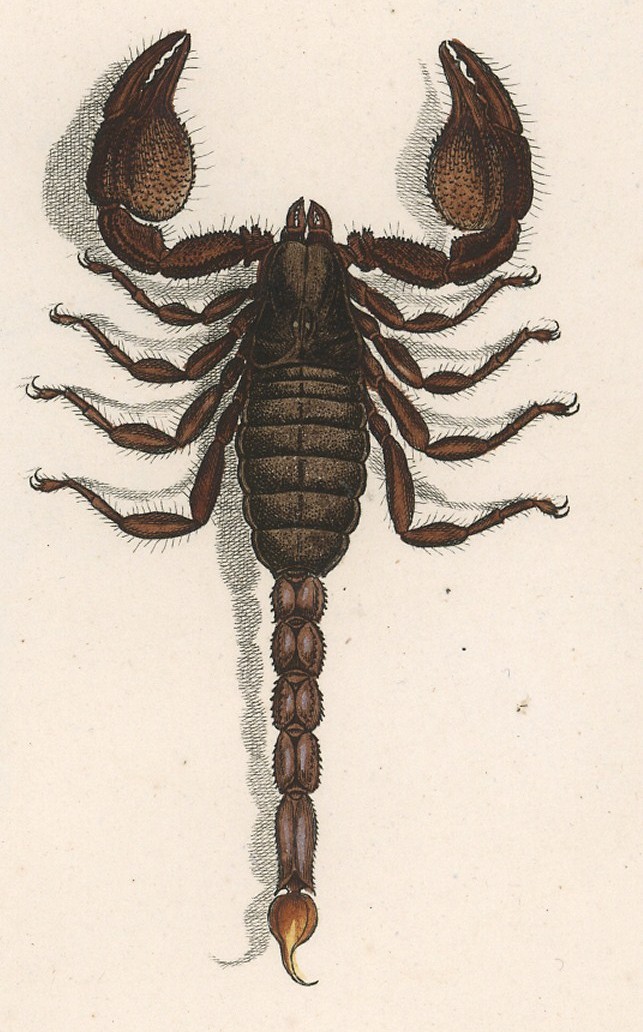
The Cape docile scorpion is a dark brown to black scorpion from South Africa and Zimbabwe, with strong, chunky pincers. If it stays hidden under cover for a while, it can slowly turn greenish.
Fun fact: this one is not an insect. It is an arachnid with eight legs, a cousin of the spiders.
Lives in
South Africa and Zimbabwe, in damp forests and thick plants
What does it eat?
Like other scorpions, it catches insects and other small creatures with its pincers.
How fast is it?
A tortoise about 0.3 km/h (0.19 mph)
Cape docile scorpion about 2 km/h (1.2 mph)
A person walking about 5 km/h (3.1 mph)
A kid running fast about 13 km/h (8.1 mph)
cool stuff
Fun facts
1
It climbs trees as well as walking on the ground.
2
It hides under bark and rocks in damp forests and thick plants, even in pine plantations.
3
Mongooses and bat-eared foxes like to eat it.
you asked
Most asked questions about Cape docile scorpion
?Where does the Cape docile scorpion live?
In South Africa and Zimbabwe, in damp forests and among thick plants.
For bug experts
- Scientific name
- Opisthacanthus capensis
- Group
- Scorpions, ticks and friends
- Classification
- Arachnida > Scorpiones
- Lives on
- Africa
Where the facts come from
- Opisthacanthus capensis (Wikipedia, CC BY-SA 4.0): what it looks like, where it lives, what it eats, sizes and fun facts, retold in simple words.
- Picture by J. F. W. Herbst. Public domain, Wikimedia Commons. The sticker of this bug is drawn from this picture.
If we got something wrong, sorry, we are bug fans, not a science journal. Tell us at [email protected] and we will fix it.
Bug Wiki honey jar For grown-ups: Bug Wiki is free, with no ads and no tracking. A small tip helps keep it online.Leave a tip Emperor scorpion
 Lone star tick
 Deathstalker
 Itch mite
 Eyelash mite
 Deer tick
 Black pine sawyer beetle
 Black-bellied hornet
 Leather beetle
 Darwin's beetle
 Jet ant
 Woodland giant wolf spider