
Cayenne tick

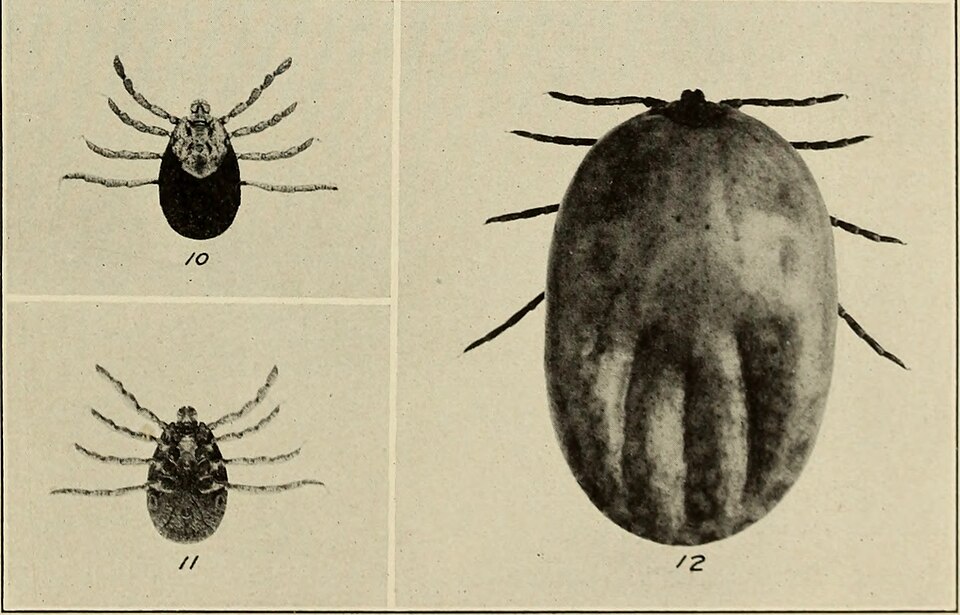
The Cayenne tick is a tick from the warm parts of the Americas. Like all ticks, it has eight legs and is a cousin of spiders, not an insect. It drinks the blood of animals and people, and it can pass on a serious illness.
Ticks: how to stay safe
- In Estonia, the castor bean tick and the taiga tick can carry Lyme disease and tick-borne encephalitis.
- Ticks wait on grass stems, from ankle to knee height. Long trousers tucked into socks and light clothes help you spot them.
- After playing outside, check your body, your hair and your pets for ticks.
- Found a tick? A grown-up should take it out quickly with fine tweezers or a tick tool: hold it close to the skin and pull slowly. No oil or alcohol on it. Then wash the spot.
- There is a vaccine against tick-borne encephalitis, for children too from one year old. Ask your doctor.
- If in the weeks after a bite you get a fever, feel ill or see a red patch that grows, go to a doctor.
How fast is it?
Fun facts
It can carry Rocky Mountain spotted fever, which makes people and cattle ill.
Scientists argued for many years whether it was one species or several. Studies of its genes showed it is really a group of look-alike species.
In 2014 scientists split it into six species, and the true Cayenne tick lives only in the Amazon region.
Scientists in Brazil found that a substance in its spit stopped some cancer cells from growing in lab mice.
Most asked questions about Cayenne tick
?Where does the Cayenne tick live?
In warm parts of the Americas, from the southern United States to northern Argentina.
For bug experts
- Scientific name
- Amblyomma cajennense
- Group
- Scorpions, ticks and friends
- Family
- Ixodidae
- Classification
- Arachnida > Ixodida > Ixodidae
- Lives on
- North America, South America
Where the facts come from
- Amblyomma cajennense (Wikipedia, CC BY-SA 4.0): what it looks like, where it lives, what it eats, sizes and fun facts, retold in simple words.
- Picture by Internet Archive Book Images. No restrictions, Wikimedia Commons. The sticker of this bug is drawn from this picture.
If we got something wrong, sorry, we are bug fans, not a science journal. Tell us at [email protected] and we will fix it.
Bug Wiki honey jar For grown-ups: Bug Wiki is free, with no ads and no tracking. A small tip helps keep it online.Leave a tip Emperor scorpion
 Lone star tick
 Deathstalker
 Itch mite
 Eyelash mite
 Deer tick
 Boatman fly
 Red and blue beetle
 Elm zigzag sawfly
 Spotted maize beetle
 Common eupithecia moth
 Red saddlebags
_(14748516866).jpg)