

Brazilian blue tarantula
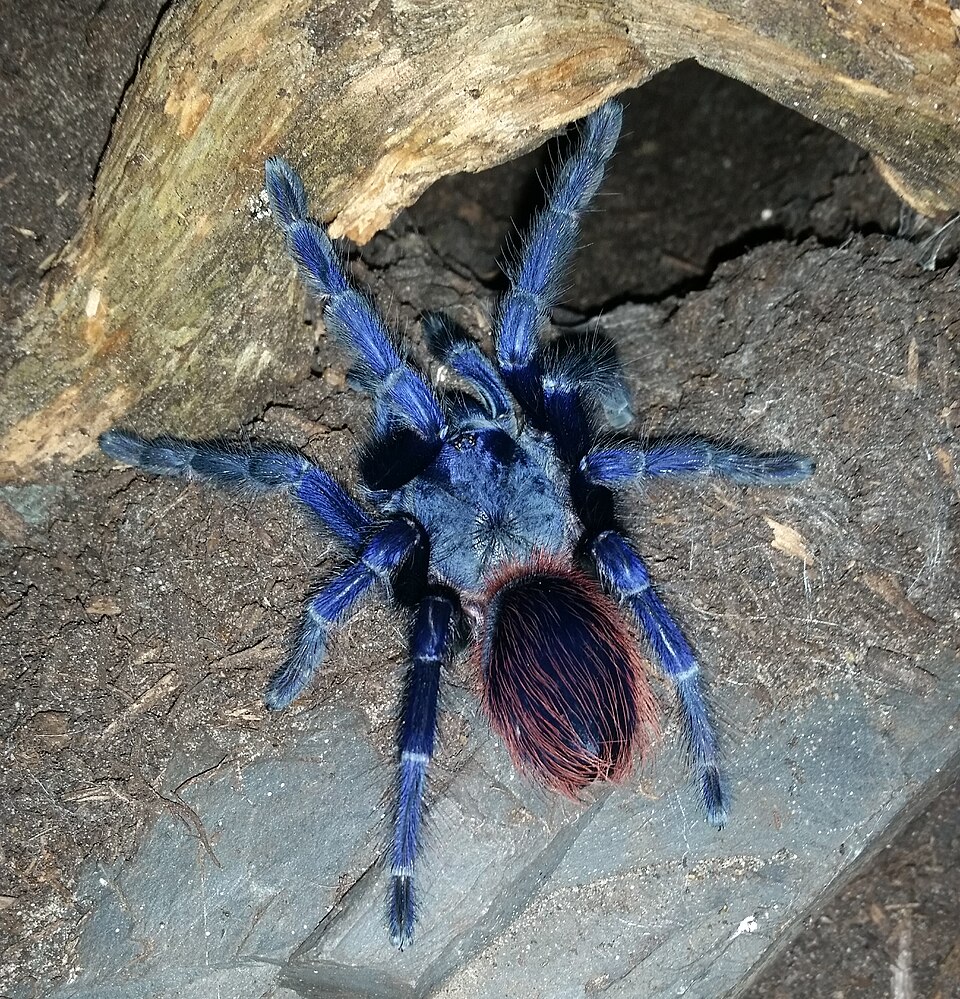
The Brazilian blue tarantula is a big, hairy spider that shines bright blue all over. It lives in only one small place in the mountains of Brazil. Scientists first described it in 2011, so it is quite a new discovery.
How fast is it?
Fun facts
In 2012 it was picked as one of the top 10 new species found in the world.
Its blue colour is not paint in its body but shine from its hairs, like a soap bubble.
It spends most of its time in a burrow in the ground.
It is endangered, because its home is getting smaller and people smuggle it to sell as a pet.
Most asked questions about Brazilian blue tarantula
?Why is the Brazilian blue tarantula blue?
Its hairs shine with a metallic blue colour that changes a little in different light.
?Where does the Brazilian blue tarantula live?
Only in one national park in the state of Bahia in Brazil.
For bug experts
- Scientific name
- Pterinopelma sazimai
- Named by
- Bertani, Nagahama & Fukushima, 2011
- Group
- Spiders
- Family
- Theraphosidae
- Classification
- Arachnida > Araneae > Theraphosidae
- Lives on
- South America
- Also known as
- Iridescent blue tarantula, Sazima's tarantula
Where the facts come from
- Lasiocyano (Wikipedia, CC BY-SA 4.0): what it looks like, where it lives, what it eats, sizes and fun facts, retold in simple words.
- Picture by Dododotzler. CC BY-SA 4.0, Wikimedia Commons. The round sticker of this bug is cut from the same picture.
If we got something wrong, sorry, we are bug fans, not a science journal. Tell us at [email protected] and we will fix it.
 European garden spider
 Goliath birdeater
 Brown recluse
 Redback spider
 Yellow garden spider
 Bold jumping spider
 Dawson's burrowing bee
 Northern scorpion
 Master blister beetle
 Ghost mantis
 Giant mesquite bug
 Nine-spotted moth