
Gopher tortoise tick

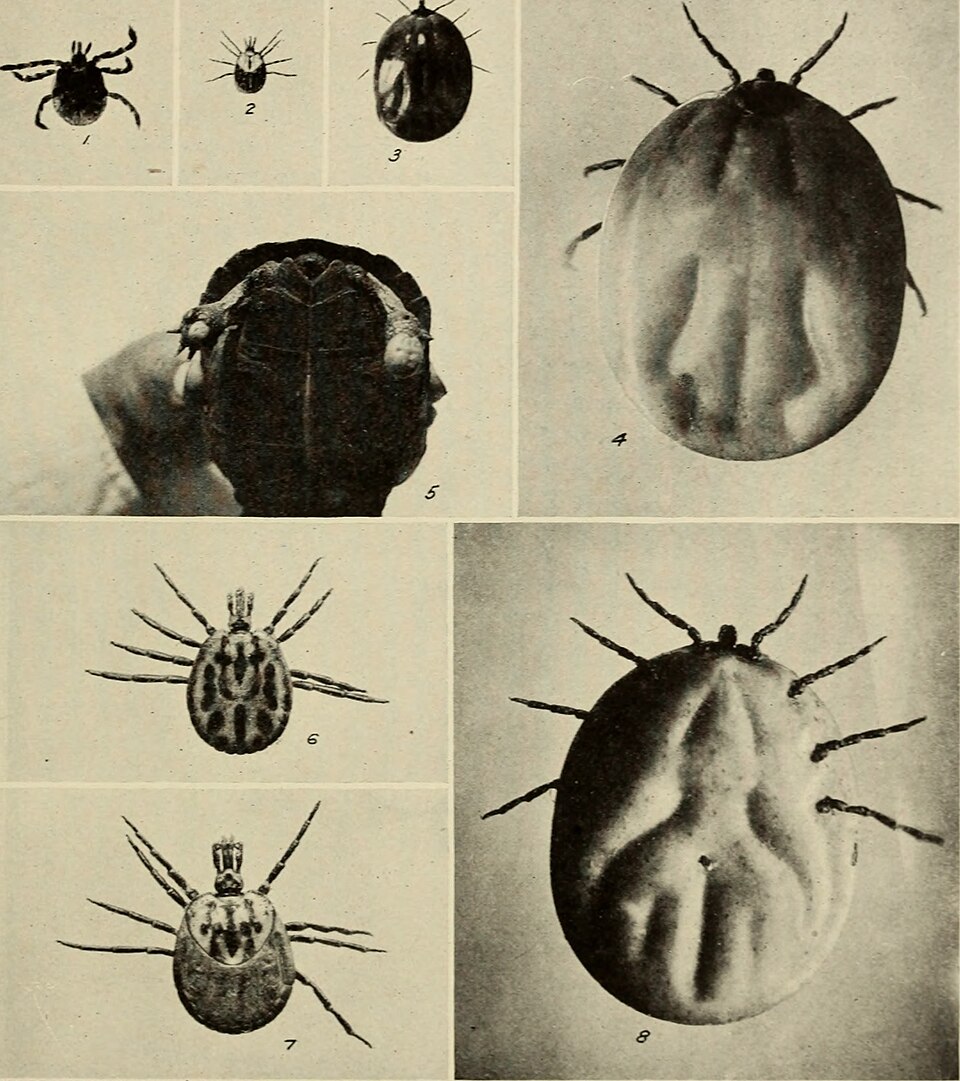
The gopher tortoise tick is a hard tick from the south-eastern United States. Its favourite host is the gopher tortoise, a big tortoise that digs burrows in sandy ground. Ticks are cousins of spiders, with eight legs as grown-ups.
Ticks: how to stay safe
- In Estonia, the castor bean tick and the taiga tick can carry Lyme disease and tick-borne encephalitis.
- Ticks wait on grass stems, from ankle to knee height. Long trousers tucked into socks and light clothes help you spot them.
- After playing outside, check your body, your hair and your pets for ticks.
- Found a tick? A grown-up should take it out quickly with fine tweezers or a tick tool: hold it close to the skin and pull slowly. No oil or alcohol on it. Then wash the spot.
- There is a vaccine against tick-borne encephalitis, for children too from one year old. Ask your doctor.
- If in the weeks after a bite you get a fever, feel ill or see a red patch that grows, go to a doctor.
How fast is it?
Fun facts
As many as 19 of these ticks have been found on a single tortoise.
One female can drink more than 2 grams of blood and then lay over 9,000 eggs.
Its babies can survive freezing cold for more than a month.
It only lives in places with very deep sand, more than a metre deep.
Going from egg to grown-up takes it at least 207 days, more than half a year.
Most asked questions about Gopher tortoise tick
?What does the gopher tortoise tick eat?
It drinks blood, mostly from gopher tortoises.
?Where does the gopher tortoise tick live?
In the south-eastern United States, in places with deep sand where gopher tortoises dig their burrows.
For bug experts
- Scientific name
- Amblyomma tuberculatum
- Group
- Scorpions, ticks and friends
- Family
- Ixodidae
- Classification
- Arachnida > Ixodida > Ixodidae
- Lives on
- North America
Where the facts come from
- Amblyomma tuberculatum (Wikipedia, CC BY-SA 4.0): what it looks like, where it lives, what it eats, sizes and fun facts, retold in simple words.
- Picture by Internet Archive Book Images. No restrictions, Wikimedia Commons. The sticker of this bug is drawn from this picture.
If we got something wrong, sorry, we are bug fans, not a science journal. Tell us at [email protected] and we will fix it.
Bug Wiki honey jar For grown-ups: Bug Wiki is free, with no ads and no tracking. A small tip helps keep it online.Leave a tip Emperor scorpion
 Lone star tick
 Deathstalker
 Itch mite
 Eyelash mite
 Deer tick
 Honeypot ant
 Golden redrump tarantula
 Flightless dung beetle
 Desert subterranean termite
 Serpent Island centipede
 Grand Canyon black tarantula
_(14584812010).jpg)