

Meganeura
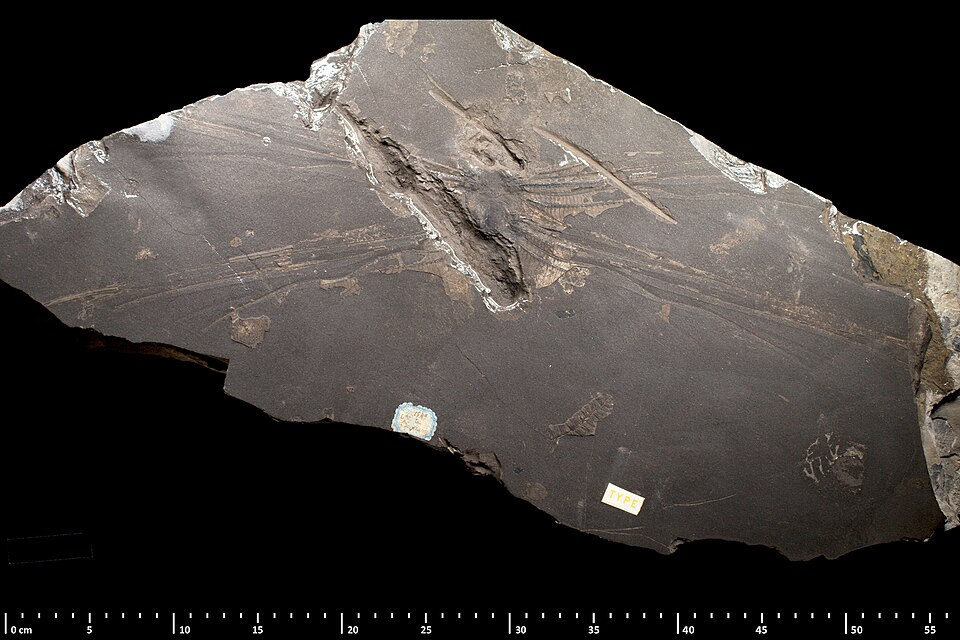
Meganeura looked like a dragonfly, but it was as big as a crow! It flew over steamy swamp forests about 300 million years ago, long before the first dinosaurs. It is one of the biggest flying insects that ever lived.
When did it live?
How big is it?
How long is it?
How wide are its wings?
How big is Meganeura compared to YOU?
Just maths in your browser. Nothing is saved or sent anywhere.
How fast is it?
Fun facts
Its wings were about 70 centimetres from tip to tip. That is wider than a pigeon's wings.
It was not a real dragonfly but a griffinfly, a cousin of the dragonflies that died out.
The first fossil was found in a coal mine in Commentry, France, in 1880.
Many scientists think insects could grow so big because the air had more oxygen in it back then.
Its name comes from the big, strong veins you can see in its fossil wings.
Most asked questions about Meganeura
?How big was Meganeura?
Its wings were about 65 to 75 centimetres across, as wide as a crow's wings.
?When did Meganeura live?
About 305 to 299 million years ago, long before the dinosaurs.
?Why are there no giant insects today?
Many scientists think the air had more oxygen back then, which helped insects grow big. Later, birds also began to hunt flying insects.
Myth buster
Myth: Meganeura was a giant dragonfly.
Truth: Almost. It was a griffinfly, a close cousin of the dragonflies. It looked very much like one, but the wings were built a little differently.
For bug experts
- Scientific name
- Meganeura
- Named by
- Brongniart, 1885
- Group
- Prehistoric giants
- Family
- Meganeuridae
- Classification
- Insecta > Meganisoptera > Meganeuridae
- Also known as
- Giant griffinfly
Where the facts come from
- Meganeura (Wikipedia, CC BY-SA 4.0): what it looks like, where it lives, what it eats, sizes and fun facts, retold in simple words.
- Picture by Gaëlle Doitteau & Sandra DAILLIE. CC BY 4.0, Wikimedia Commons. The round sticker of this bug is cut from the same picture.
If we got something wrong, sorry, we are bug fans, not a science journal. Tell us at [email protected] and we will fix it.
 Anomalocaris
 Arthropleura
 Hallucigenia
 Opabinia
 Megarachne
 Jaekelopterus