
Rio Grande gold tarantula
Aphonopelma moderatum
Name means: “named after the Rio Grande Valley in Texas, where it lives”
Eats: Other bugs and small animalsSpidersDeserts and dry places8 legsNot an insect, but a bug cousin

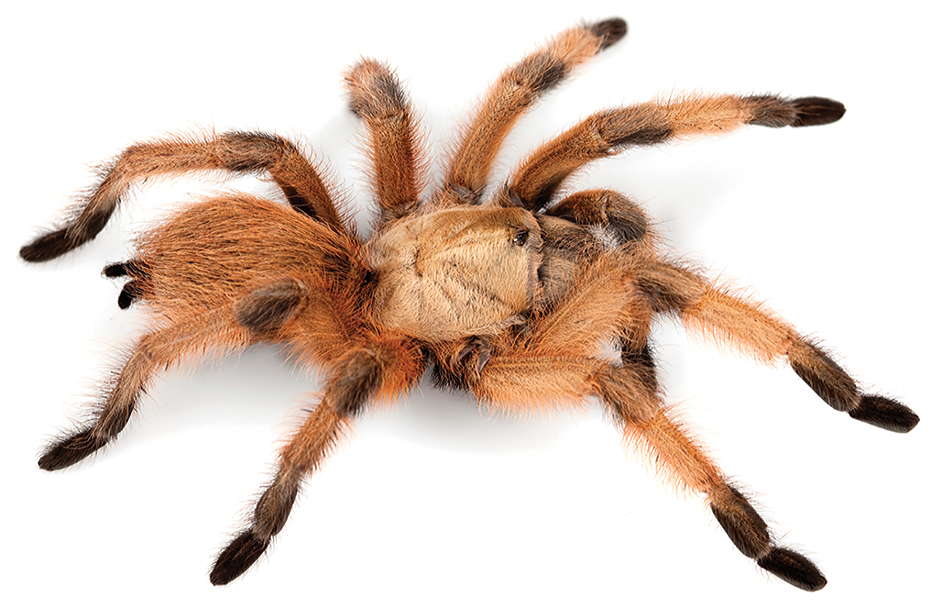
The Rio Grande gold tarantula is a big, hairy spider from Texas. The female is orange and tan, with black feet. It is known for being calm and gentle.
Fun fact: spiders are not insects. Insects have six legs, spiders have eight. Everyone calls them bugs anyway!
Lives in
The Rio Grande Valley in Texas, United States
What does it eat?
Like other tarantulas, it hunts insects and other small animals.
How fast is it?
A tortoise about 0.3 km/h (0.19 mph)
Rio Grande gold tarantula about 1.5 km/h (0.93 mph)
A person walking about 5 km/h (3.1 mph)
A kid running fast about 13 km/h (8.1 mph)
cool stuff
Fun facts
1
Females can live for 22 to 40 years. That is longer than most dogs and cats.
2
Males live only about 7 years and look very different: dark brown and black, with dark orange hairs.
3
If something scares it, it may run away or flick tiny hairs from its body, but it hardly ever does this.
4
Young spiderlings like to dig burrows, while grown-ups often just find a hiding place instead.
you asked
Most asked questions about Rio Grande gold tarantula
?How long does a Rio Grande gold tarantula live?
Females live 22 to 40 years. Males live about 7 years.
For bug experts
- Scientific name
- Aphonopelma moderatum
- Group
- Spiders
- Family
- Theraphosidae
- Classification
- Arachnida > Araneae > Theraphosidae
- Lives on
- North America
Where the facts come from
- Aphonopelma moderatum (Wikipedia, CC BY-SA 4.0): what it looks like, where it lives, what it eats, sizes and fun facts, retold in simple words.
- Picture by Chris A. Hamilton, Brent E. Hendrixson, Jason E. Bond. CC BY 4.0, Wikimedia Commons. The sticker of this bug is drawn from this picture.
If we got something wrong, sorry, we are bug fans, not a science journal. Tell us at [email protected] and we will fix it.
Bug Wiki honey jar For grown-ups: Bug Wiki is free, with no ads and no tracking. A small tip helps keep it online.Leave a tip European garden spider
 Goliath birdeater
 Brown recluse
 Redback spider
 Yellow garden spider
 Bold jumping spider
 Charcoal seed bug
 California mantis
 Cactus scattered cochineal
 Funereal duskywing
 Rough harvester ant
 Black-tailed alligatorback scorpion