

White-marked tussock moth
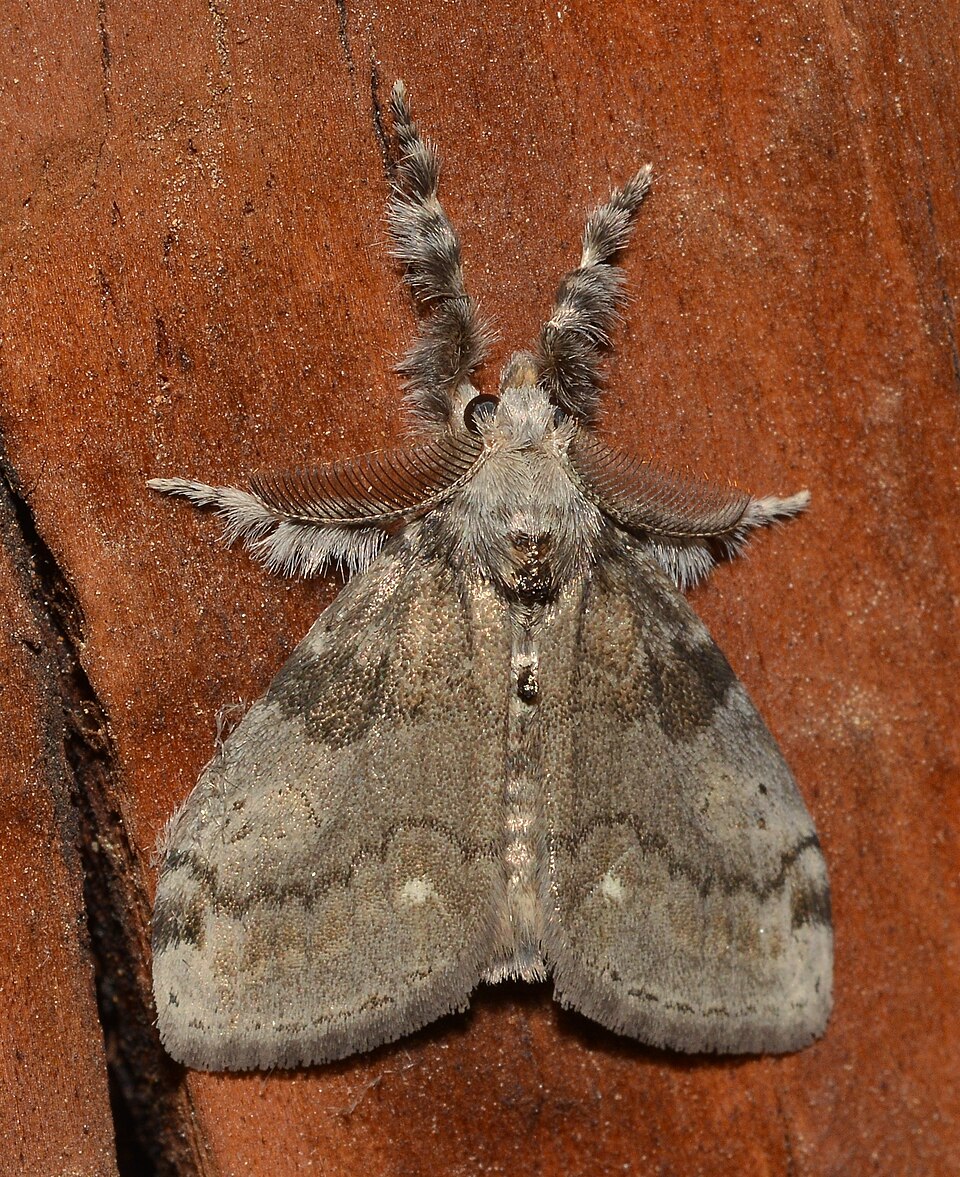
The white-marked tussock moth is famous for its wild-looking caterpillar. It has a bright red head, yellow stripes and four white tufts on its back that look like little toothbrushes. The grown-up male is a plain grey moth with a white spot on each front wing.
How fast is it?
Fun facts
The female has only tiny wings and cannot fly. She stays on her cocoon and lays her eggs right there.
She lays up to 300 eggs at once and covers them in foam.
The caterpillar grows to about 3.5 centimetres long.
The caterpillar weaves its own hairs into its grey cocoon.
The four white tufts on the caterpillar's back may look like the cocoons of wasps, which might fool hungry enemies.
Most asked questions about White-marked tussock moth
?What does the white-marked tussock caterpillar turn into?
It turns into a moth. The male is grey with wavy black lines, and the female has hardly any wings.
?What does it eat?
The caterpillar eats leaves of many trees, both leafy trees and evergreens.
For bug experts
- Scientific name
- Orgyia leucostigma
- Named by
- Smith, 1797
- Group
- Moths
- Family
- Erebidae
- Classification
- Insecta > Lepidoptera > Erebidae
- Lives on
- North America
Where the facts come from
- Orgyia leucostigma (Wikipedia, CC BY-SA 4.0): what it looks like, where it lives, what it eats, sizes and fun facts, retold in simple words.
- Picture by Andy Reago & Chrissy McClarren. CC BY 2.0, Wikimedia Commons. The round sticker of this bug is cut from the same picture.
If we got something wrong, sorry, we are bug fans, not a science journal. Tell us at [email protected] and we will fix it.
 Atlas moth
 Luna moth
 Hummingbird hawk-moth
 Domestic silk moth
 Isabella tiger moth
 Polyphemus moth
 Green-head ant
 Blue orchard bee
 Common red soldier beetle
 Dark giant horsefly
 Orchard spider
 Texas brown tarantula
.jpg)