
Bolivian salmon pink tarantula
Acanthoscurria chacoana
Eats: Other bugs and small animalsSpidersDeserts and dry places8 legsNot an insect, but a bug cousin

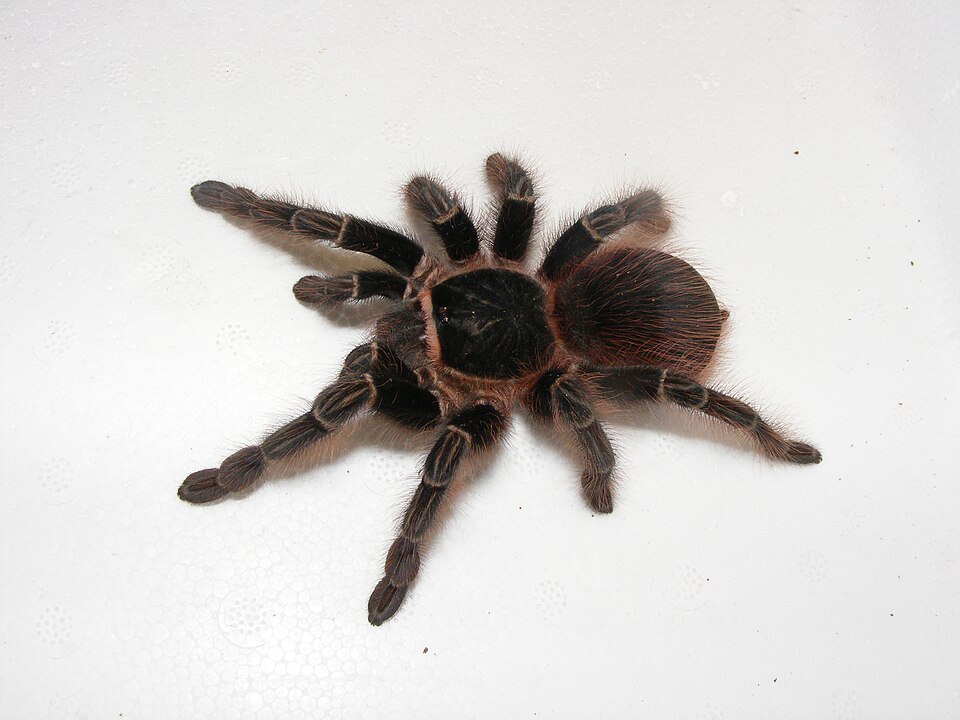
The Bolivian salmon pink tarantula is a big, calm, reddish-brown tarantula from South America. Its legs have pale tan stripes. It lives on the ground and digs burrows.
Fun fact: spiders are not insects. Insects have six legs, spiders have eight. Everyone calls them bugs anyway!
Lives in
Brazil, Bolivia, Paraguay and Argentina
What does it eat?
Like other tarantulas, it catches insects and other small animals.
How fast is it?
A tortoise about 0.3 km/h (0.19 mph)
Bolivian salmon pink tarantula about 1.5 km/h (0.93 mph)
A person walking about 5 km/h (3.1 mph)
A kid running fast about 13 km/h (8.1 mph)
cool stuff
Fun facts
1
Females can live up to 20 years, but males usually live only 3 or 4 years.
2
Big ones can measure up to about 19 centimetres.
3
Males are much smaller than females.
4
It grows fast and is a popular pet because it is so calm.
you asked
Most asked questions about Bolivian salmon pink tarantula
?How long does the Bolivian salmon pink tarantula live?
Females can live up to 20 years, males only 3 or 4.
For bug experts
- Scientific name
- Acanthoscurria chacoana
- Group
- Spiders
- Family
- Theraphosidae
- Classification
- Arachnida > Araneae > Theraphosidae
- Lives on
- South America
- Also known as
- Bolivian red rump tarantula
Where the facts come from
- Acanthoscurria chacoana (Wikipedia, CC BY-SA 4.0): what it looks like, where it lives, what it eats, sizes and fun facts, retold in simple words.
- Picture by snakecollector. CC BY 2.0, Wikimedia Commons. The sticker of this bug is drawn from this picture.
If we got something wrong, sorry, we are bug fans, not a science journal. Tell us at [email protected] and we will fix it.
Bug Wiki honey jar For grown-ups: Bug Wiki is free, with no ads and no tracking. A small tip helps keep it online.Leave a tip European garden spider
 Goliath birdeater
 Brown recluse
 Redback spider
 Yellow garden spider
 Bold jumping spider
 Large pugnacious ant
 Eastern festoon
 Sonoran blue
 Citrus cicada
 Small salmon Arab
 Grand antlion